Dual-Curve Yarn vs. Traditional Fancy Yarn: What’s the Difference?
When developing a new knitwear or textile collection, yarn selection plays an important role in the final look and feel of the fabric.
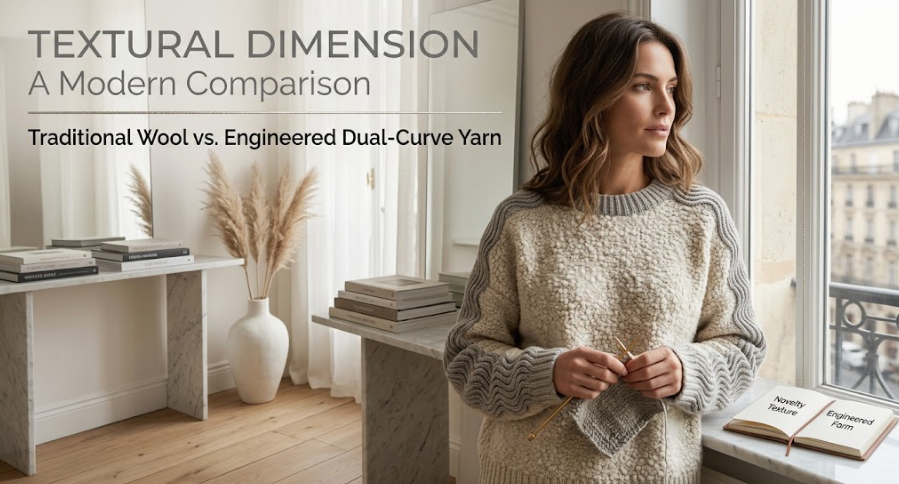
Different yarn structures can create completely different surface effects. Traditional fancy yarns are widely used to add loops, slubs, softness, shine, or other decorative effects, while dual-curve yarn offers another approach by creating texture through a controlled curved structure.
So, what is the difference between dual-curve yarn and traditional fancy yarn? And which type of yarn is more suitable for your next textile development project?
The answer depends on the fabric effect, knitting or weaving process, and end-use requirements.
What Is Traditional Fancy Yarn?
Fancy yarn is a broad category of yarns designed to create decorative or distinctive effects in fabrics.
Unlike conventional yarns with a relatively uniform appearance, fancy yarns may feature variations in thickness, loops, fibers, color, shine, or surface structure.
Some common types include:
Slub Yarn
Slub yarn contains intentional thick and thin sections along the yarn. When knitted or woven, these variations create an irregular and natural-looking texture.
Bouclé and Loop Yarn
These yarns feature loops or curls that extend from the main yarn structure, creating a soft and textured surface.
They are commonly used in sweaters, coats, scarves, and other fashion textiles.
Chenille Yarn
Chenille yarn has a soft, velvety surface and is often selected when a fuller and more comfortable hand feel is required.
Metallic and Novelty Yarns
Metallic yarns and other novelty yarns can add shine, contrast, or decorative details to fashion fabrics.
Fancy yarns are therefore extremely versatile and can be used for everything from casual knitwear to premium fashion collections.
What Is Dual-Curve Yarn?
Dual-curve yarn is a specialty yarn designed with a controlled curved or wave-like structure.
Instead of relying primarily on loops, slubs, or surface fibers to create texture, the yarn’s structure itself contributes to the visual effect of the finished fabric.
When knitted or woven, the curved structure can create:
- More visible surface variation
- A sense of three-dimensional texture
- Visual movement across the fabric
- Interesting changes in light and shadow
- A distinctive surface character
The final effect will depend on the yarn specification, fabric construction, machine settings, and finishing process.
This makes sampling particularly important when developing dual-curve yarn for a new textile application.
Dual-Curve Yarn vs. Traditional Fancy Yarn
Although both belong to the broader specialty and fancy yarn category, they create texture in different ways.
| Feature | Traditional Fancy Yarn | Dual-Curve Yarn |
|---|---|---|
| How texture is created | Through loops, slubs, piles, fibers, color effects, or other decorative structures | Through a controlled curved or wave-like yarn structure |
| Typical appearance | Can range from soft and fluffy to irregular, chunky, or shiny | More structured, flowing, and dimensional |
| Surface effect | Often clearly defined decorative effects | More continuous surface movement |
| Design possibilities | Wide range of established fancy yarn effects | Particularly suitable for modern textured and dimensional designs |
| Common applications | Knitwear, scarves, coats, accessories, decorative textiles | Knitwear, fashion fabrics, accessories, and specialty textile developments |
| Development approach | Select an existing fancy yarn structure or customize it | Often requires sampling to achieve the desired curved effect |
The two should not necessarily be viewed as competing products.
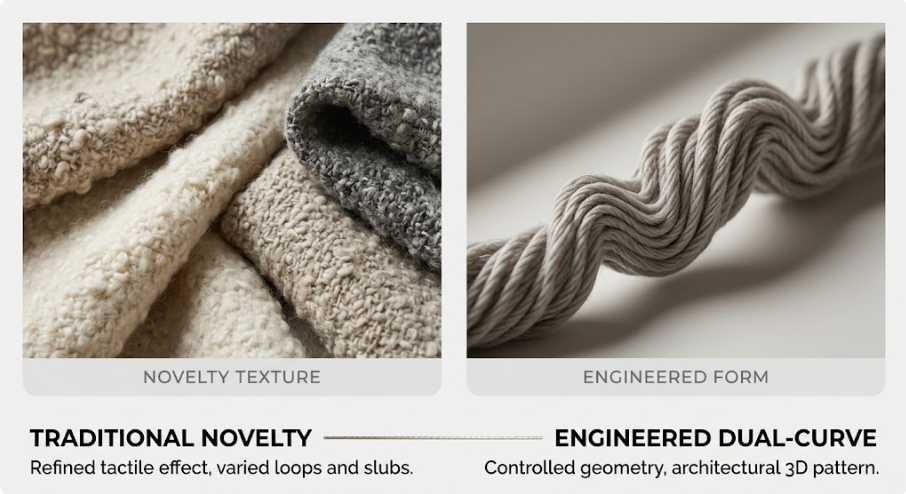
In many cases, they can be used for different design purposes—or even combined within the same collection.
Which Yarn Creates a More Suitable Fabric Effect?
There is no single yarn structure that works for every application.
The right choice depends on the look and performance you want to achieve.
Choose Traditional Fancy Yarn When You Want:
- Classic textured effects
- Soft or fluffy surfaces
- Slub or irregular visual effects
- Bouclé or loop structures
- Chenille-like softness
- Established yarn constructions
- Decorative or cozy knitwear
Traditional fancy yarns offer a large selection of familiar effects and are suitable for many types of fashion textiles.
Consider Dual-Curve Yarn When You Want:
- A more structured surface effect
- Three-dimensional visual interest
- A flowing or wave-like appearance
- Contemporary fashion textures
- Distinctive knitwear surfaces
- A specialty yarn developed around a specific design concept
For designers looking to create a less conventional surface effect, dual-curve yarn can provide another option beyond traditional fancy yarn structures.
Can Dual-Curve Yarn and Fancy Yarn Be Combined?
Yes.
Using different yarn structures together can create more complex fabric effects and give designers greater control over the final appearance.
Complex surface effects through structural diversity
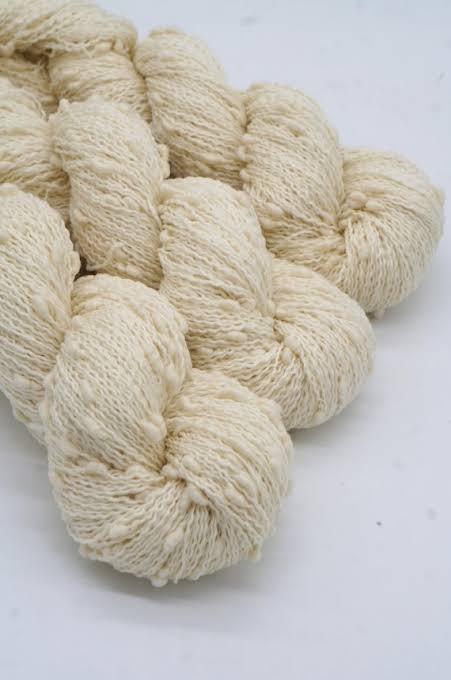
Traditional specialty yarn featuring textured loops and slubs.
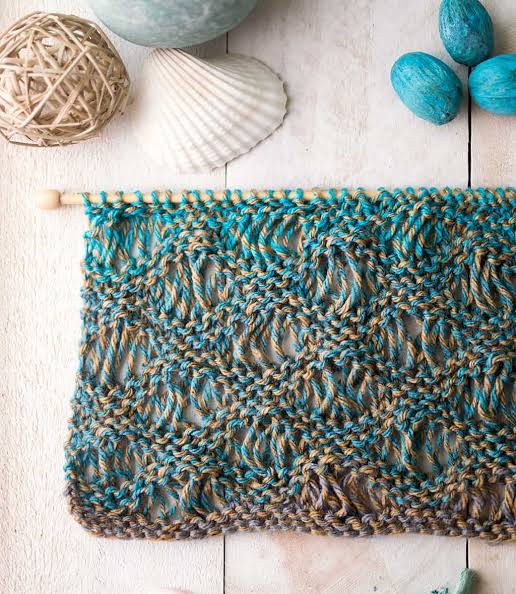
Dynamic wave-like dimensional effect in knitted textile
For example, dual-curve yarn can be combined with:
Metallic Yarn
Adding metallic yarn can introduce subtle highlights and shine to a textured fabric.
This combination can be suitable for:
- Evening knitwear
- Holiday collections
- Fashion accessories
- Decorative fabrics
- Premium seasonal collections
Basic or Blended Yarn
A conventional yarn can provide the main fabric structure, while dual-curve yarn is introduced as a decorative or textured component.
This can be useful for stripes, panels, borders, or selected areas of a garment.
High-Gloss Yarn
Combining a structured yarn with a high-gloss component can create an interesting contrast between texture and light reflection.
This approach can be particularly useful for fashion fabrics where surface appearance is an important part of the design.
Explore Tongyang Yarn’s specialty yarn products to see different yarn options for fashion and textile development.
What Should Textile Buyers Consider Before Choosing a Yarn?
For textile manufacturers and sourcing teams, choosing between different specialty yarns involves more than comparing appearance on a sample card.
Several practical factors should be considered.
1. Knitting or Weaving Compatibility
Always test the yarn on the actual equipment that will be used for production.
For knitwear, this may include flat knitting or circular knitting machines. For woven applications, yarn feeding and weaving performance should also be evaluated.
Machine gauge, yarn tension, feeding conditions, and fabric construction can all affect the final result.
2. Final Fabric Appearance
A yarn may look very different when it is knitted or woven into a finished fabric.
Sample development should evaluate:
- Surface texture
- Fabric density
- Visual depth
- Pattern definition
- Overall appearance
- Consistency
This is particularly important for specialty yarns with unusual structures.
3. Finishing Process
Washing, steaming, heat-setting, dyeing, and other finishing processes can affect the appearance and hand feel of the final fabric.
Testing the fabric after the intended finishing process can provide a much more accurate indication of production results.
4. Hand Feel and Comfort
For apparel applications, the final fabric should be evaluated for softness, comfort, drape, and tactile quality.
The yarn that looks attractive on a sample card may not necessarily produce the desired hand feel once knitted or woven.
5. MOQ and Customization
For seasonal fashion development, sample speed and production flexibility can be just as important as the yarn itself.
When working with a specialty yarn supplier, buyers should clarify:
- Sample lead time
- Available specifications
- Custom color options
- Custom yarn structures
- Minimum order quantities
- Production lead times
- Batch consistency
Why Sampling Matters for Specialty Yarn Development
One of the most important steps when sourcing specialty yarn is fabric testing.
A yarn sample or color card can show the basic appearance of the yarn, but it cannot fully predict how the yarn will behave in a finished fabric.
For this reason, we recommend testing sample yardage on the intended machine and evaluating the resulting fabric before moving into bulk production.
This allows designers and manufacturers to adjust:
- Yarn specification
- Knitting or weaving settings
- Yarn combinations
- Fabric construction
- Finishing conditions
The result is a much clearer understanding of whether the yarn is suitable for the intended product.
How to Choose the Right Specialty Yarn Supplier
For custom or specialty yarn development, the supplier’s technical support can be just as important as the product itself.
A reliable supplier should be able to provide:
- Clear technical specifications
- Sample development
- Custom yarn options
- Color matching
- Consistent production quality
- Flexible MOQ options
- Stable lead times
- Technical communication during development
This is particularly valuable when developing a new yarn structure that is not available as a standard commercial product.
Dual-Curve Yarn for Modern Textile Development
Traditional fancy yarns remain an important part of fashion and textile production because they offer a wide range of established decorative effects.
Dual-curve yarn offers another approach to texture by using a controlled curved structure to create visual depth and movement.
The choice between the two depends on the desired fabric appearance, production process, hand feel, and end-use application.
Rather than replacing traditional fancy yarns, dual-curve yarn can be viewed as an additional option for designers and textile manufacturers looking to develop new surface effects.
For brands and manufacturers working on contemporary knitwear and specialty fabrics, combining different yarn structures can also open up new design possibilities.
Develop Your Next Specialty Yarn with Tongyang Yarn
Tongyang Yarn supplies specialty and fancy yarns for fashion and textile applications, including dual-curve yarn, metallic yarn, blended yarn, high-gloss yarn, and other customized yarn solutions.
We work with textile manufacturers, knitting mills, fashion brands, and product developers to develop yarns according to specific design and production requirements.
If you are looking for a dual-curve yarn supplier or want to develop a custom fancy yarn for your next collection, contact Tongyang Yarn to discuss your requirements and request samples.
You can also explore our specialty yarn products and textile applications for more information.