
Metallic Yarn in European Textile Design: What Buyers Should Know
WHAT BUYERS SHOULD KNOW…
METALLIC YARN DESIGN
From high-shine effects to subtle texture, metallic yarn is becoming a more versatile tool for contemporary knitwear and textile design.
Metallic yarn has traditionally been associated with festive fashion, eveningwear and highly decorative garments.
But the role of metallic yarn in contemporary European design is changing.
For Autumn/Winter 2026, metallic details are appearing alongside clean silhouettes, refined knit structures and contrasting textures. On European runways, gold and silver are being used not only as statement elements, but also as controlled accents within otherwise wearable garments. Milan Fashion Week, for example, showed metallic effects ranging from glittering gold to silver surfaces, while other AW26 collections combined decorative knitwear with more structured, everyday pieces.
For yarn buyers and knitwear manufacturers, this means one thing:
Choosing a metallic yarn is no longer simply about choosing the right colour or level of shine.
The construction, yarn count, fibre composition, knitting performance and final handle all matter.
1. Metallic Does Not Have to Mean “Too Shiny”
One of the most important changes in contemporary European textile design is the move from obvious shine to controlled metallic expression.
A metallic yarn can be:
- a subtle silver line within a neutral knit;
- a warm gold accent in a soft viscose blend;
- a deeper metallic tone integrated into a geometric pattern;
- a contrasting filament used to highlight a specific stitch structure;
- or a stronger metallic surface designed for eveningwear.
The objective is not always to make the garment look “sparkly”.
Instead, designers are increasingly interested in depth, texture and contrast.
This is particularly relevant to knitwear.
A simple sweater can remain commercially wearable while metallic yarn changes the way the surface catches light. The result is more dimensional without necessarily changing the silhouette.
This balance between wearability and visual impact is particularly relevant to the European market.
2. Why Yarn Construction Matters More Than the Metallic Effect Alone
For a designer, “gold” or “silver” is only the beginning.
For a yarn buyer or production team, the more important questions are:
- What is the yarn construction?
- What is the yarn count?
- What fibres are blended with the metallic component?
- How does the yarn behave during knitting?
- How does it feel after knitting?
- Does the metallic effect remain consistent?
- Is it suitable for the intended machine gauge?
- How does it interact with the main yarn?
These technical details determine whether a metallic yarn becomes an elegant design element—or creates unnecessary production challenges.
For this reason, metallic yarn should be evaluated as a functional textile material, not simply as a decorative thread.
3. Four Metallic Yarn Qualities: Four Different Design Directions
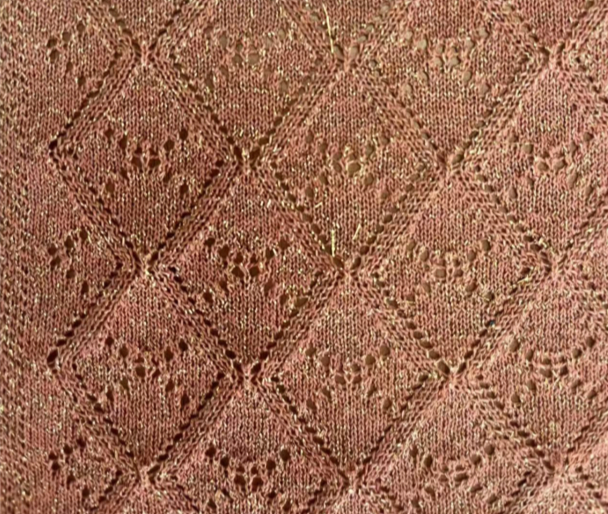
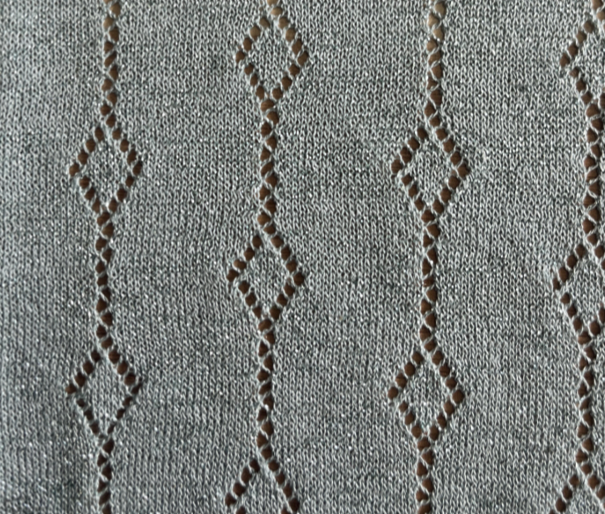
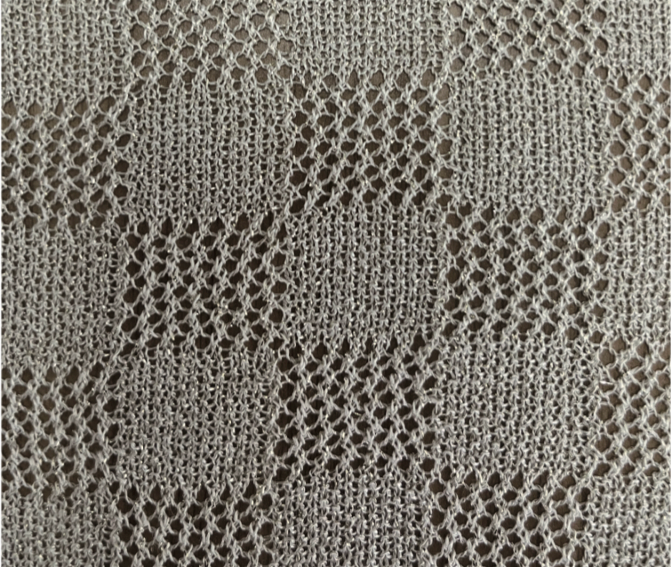
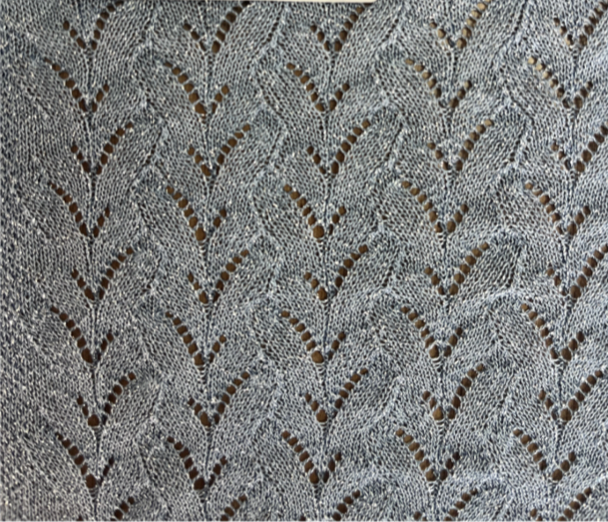
Our current metallic yarn samples illustrate how different constructions can create very different textile effects.
1/24 NM Viscose & Nylon Metallic Yarn
Type: V65 N5 LUREX30
Colour: Orange
Composition: Viscose & Nylon blend with gold and silver metallic effect
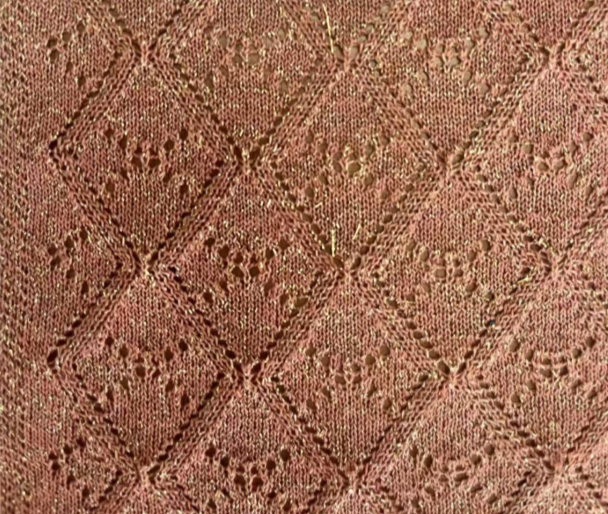
This construction is particularly interesting for designers looking for a balance between softness, colour and metallic detail.
The viscose component provides a soft textile character, while nylon contributes to yarn structure and durability. The metallic element adds a controlled reflective effect.
Rather than creating a completely metallic surface, this type of yarn can be integrated into patterned knitwear where the metallic element appears as part of the overall structure.
The orange base shown in our sample also demonstrates how metallic yarn does not need to be limited to traditional gold, silver or black.
1/23 NM Viscose Metallic Yarn
Type: V45 P44 Metallic11
Colour: Beige
Composition: Viscose & polyester blend with gold and silver metallic effect
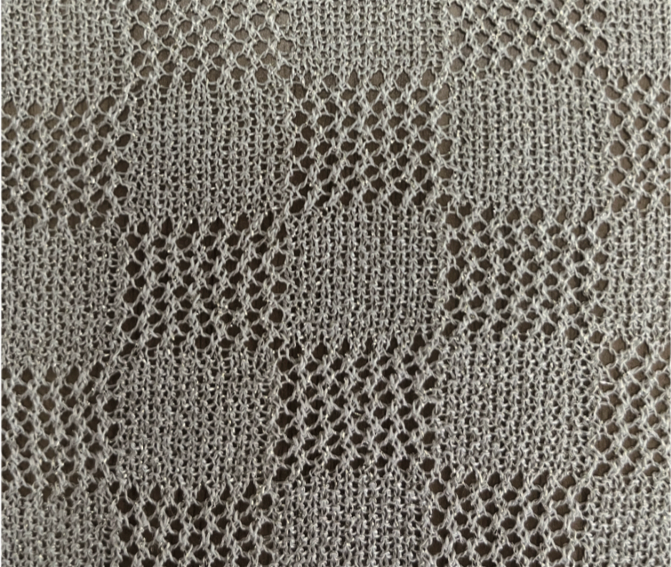
This is a good example of the “quiet metallic” direction.
The beige base keeps the overall appearance understated, while the metallic component introduces a fine change in surface reflection.
This kind of colour combination can be particularly relevant to European commercial collections, where metallic effects need to work with neutral wardrobes rather than dominate the entire garment.
The difference may seem small, but it changes the positioning of the finished garment considerably.
1/26 NM Polyester Metallic Yarn
Type: P88 LUREX12
Colour: Sky Blue
Composition: 100% Polyester with gold and silver metallic effect
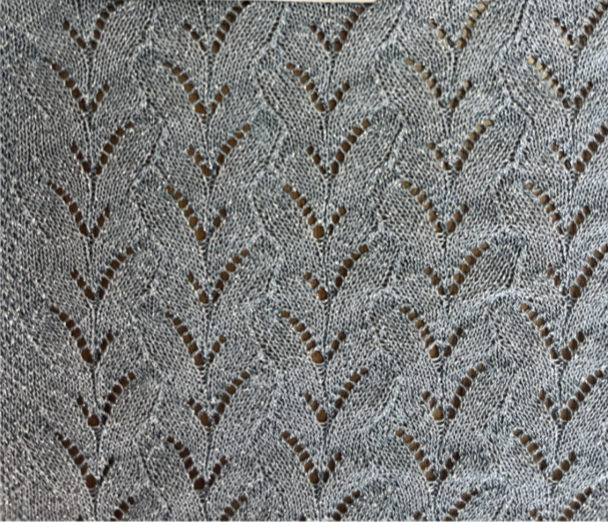
This quality takes a different approach.
With a higher polyester component and a relatively controlled metallic percentage, it can create a cleaner and more defined visual effect.
The sky-blue colour also demonstrates another direction for metallic yarn development:
metallic effect does not have to be associated with dark colours.
Cool colours combined with silver or metallic highlights can create a more contemporary and lightweight appearance.
Potential applications include:
- fashion knitwear;
- lightweight sweaters;
- decorative knit structures;
- seasonal colour collections;
- accessories.
1/21 NM Viscose & Nylon Metallic Yarn
Type: V61 P10 LUREX29
Colour: Blue
Composition: Deep-coloured viscose blend with metallic effect
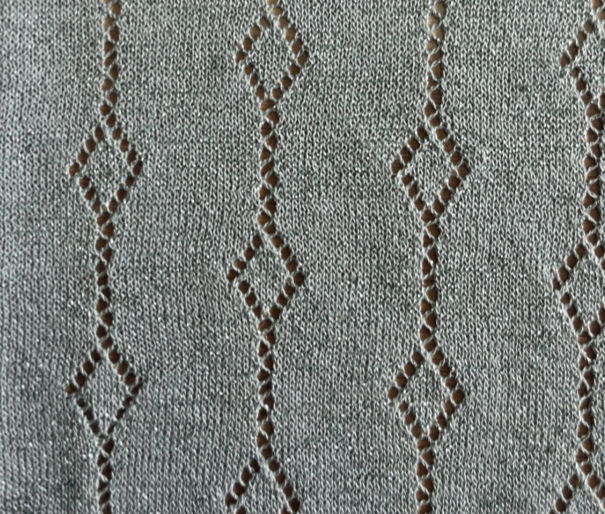
This quality demonstrates another important design direction: using metallic yarn as a structural accent.
In the knitted sample, the metallic effect is not simply spread across the entire surface. Instead, it becomes more visible within the knitted pattern.
This allows designers to create garments where:
The knit structure creates the visual effect, and the metallic yarn enhances it.
That is a very different approach from using metallic yarn as an all-over glitter effect.
It gives designers greater control over the final appearance and makes the yarn suitable for more commercial, everyday fashion pieces.
4. Choosing the Right Metallic Yarn for Your Collection
Every collection has different requirements.
Before selecting a metallic yarn, we recommend considering:
1. What is the final garment?
Sweater, cardigan, dress, accessory or home textile?
2. What is the desired visual effect?
Subtle, refined, contrasting or highly reflective?
3. What is the base fibre?
Viscose, polyester, nylon, wool blend or another construction?
4. What knitting machine and gauge will be used?
5. How much metallic effect is actually needed?
6. What hand feel should the final garment have?
7. Is the yarn intended for sampling or commercial production?
These questions often lead to a better yarn choice than simply selecting the brightest metallic option.
Metallic yarn is evolving from a decorative novelty into a more versatile component of contemporary textile design.
For European designers and buyers, the opportunity is not simply to add gold or silver to a garment.
It is to use metallic yarn to create:
texture, contrast, depth, movement and subtle visual interest.
At TONGYANG YARN we work with different fibre compositions, yarn counts and metallic constructions to develop yarns for fashion knitwear and other textile applications.
Whether you are looking for a subtle metallic effect for a commercial knitwear collection or a more distinctive yarn for a fashion-focused programme, the right starting point is the finished textile—not the yarn alone.
Looking for a specific metallic yarn construction or count?
Share your fibre composition, yarn count, colour reference, knitting gauge and end application with our team. We can recommend suitable qualities and arrange samples for evaluation.