How to Select Fancy Yarn for European Textiles
Choosing the right fancy yarn is important for European textile and knitwear manufacturers because yarn selection affects fabric appearance, knitting performance, hand feel, durability, and production efficiency.
HOW TO SELECT FANCY YARN FOR TEXTILE PRODUCTION
Will this yarn perform consistently in production and create the intended effect in the final fabric?
For designers and sourcing teams, the challenge extends beyond finding an eye-catching sample on a yarn card. The real question is:
Will this yarn perform consistently in production and create the intended effect in the final fabric?
This guide explains how European textile manufacturers can systematically evaluate fancy yarn before committing to a production order.
What Is Fancy Yarn?
Fancy yarn refers to yarns engineered with deliberate visual or structural irregularities that differ from conventional, uniform yarns. Depending on the construction, fancy yarn creates:
- Surface & Texture: Bouclé textures, loop effects, slubs, and irregular surface structures.
- Visual & Luster: Metallic glints, high-gloss effects, color variations, and mixed-fiber visual accents.
- Physical Properties: Elasticity, dimensional volume, and unique tactile qualities.
Unlike standard yarn, fancy yarn must balance aesthetic impact with high-speed manufacturing performance.
Why Fancy Yarn Matters in European Textile Design
European textile collections increasingly merge material innovation with sensory expression. European trend research for AW 2026/27 highlights strong demand for rich textures, decorative structures, recycled fibers, and sophisticated color play across:
- Fashion Knitwear: Sweaters, cardigans, scarves, and hats.
- Decorative Textiles: Jacquards, fashion accessories, home textiles, and premium outerwear.
The core shift in modern design is that fancy yarn is no longer just about adding “shine”—it provides depth, softness, movement, contrast, and a distinct tactile identity.
1. Start With the Final Fabric, Not the Yarn
Selecting yarn before defining the target application is a common sourcing pitfall. Always begin with the intended fabric characteristics: What should the final textile look, feel, and perform like?
|
Desired Fabric Effect |
Recommended Yarn Direction |
|---|---|
|
Subtle Luxury |
Fine metallic or blended fancy yarn |
|
Strong Surface Texture |
Bouclé, loop, or slub yarn |
|
Glossy Appearance |
Metallic or high-gloss filament yarn |
|
Soft Dimensional Volume |
Textured or core-spun blended yarn |
|
Lightweight Decorative Effect |
Fine-count fancy yarn |
|
Rustic Premium Appearance |
Wool or wool-blend fancy yarn |
|
Contemporary Fashion Contrast |
Metallic paired with color-contrast fibers |
Note: The same fancy yarn produces drastically different results depending on machine gauge, stitch structure, and fiber blends.
2. Check Key Yarn Construction Parameters
Aesthetic appeal on a sample card does not guarantee smooth running on an industrial knitting bed. Before approving a yarn, evaluate the following parameters with your supplier:
- Physical Dimensions: Yarn count, yarn diameter, weight per cone, and surface hairiness.
- Structural Engineering: Fiber composition, filament vs. staple construction, twist dynamics, and elongation.
- Performance Attributes: Tensile strength, surface stability, color consistency, and recommended knitting gauge.
3. Evaluate Machine Compatibility
European knitwear manufacturing relies on precise settings and repeatable production parameters. Fancy yarn must be assessed against specific machine requirements:
- Gauge & Speed: What machine gauge will be used, and what is the target operational speed?
- Structure: Is the yarn suited for single jersey, double jersey, or intricate jacquard constructions?
- Feeding Dynamics: Does the irregular texture require lower feeding tension or specialized yarn feeders?
Conducting production trials on the target machine is far more reliable than visual approval alone.
4. Assess Hand Feel and Sensory Identity
The final garment must align with target consumer expectations for comfort and drape. Tactile evaluation should match the garment category:
- Winter Sweaters: Require soft, voluminous, and cozy hand feel.
- Fashion Cardigans: Benefit from lightweight, structural textures.
- Scarves & Accessories: Prioritize softness, smooth skin contact, and fluid drape.
- Premium Garments: Require a balanced equilibrium between visual texture and wearer comfort.
5. Metallic Fancy Yarn: Strategic Application
Metallic yarn demonstrates why application-driven design works best. Rather than using metallic yarn throughout an entire garment, targeted placement delivers a more sophisticated, high-end finish:
- Placement: Collar borders, cuffs, necklines, jacquard details, logo areas, and decorative panels.
- Trend Context: For AW 2026/27, combining metallic yarn with textured or recycled-wool blends produces controlled, understated luster rather than overwhelming shine.
6. Evaluate Color in the Knitted Swatch
Yarn color on a cone or shade card rarely looks identical once converted into fabric. Colors alter based on stitch density, light reflection across irregular fibers, companion yarns, and fabric thickness.
Best Practice: Always approve color from a finished, washed fabric swatch rather than relying solely on yarn cones.
7. Follow a Structured Evaluation Process
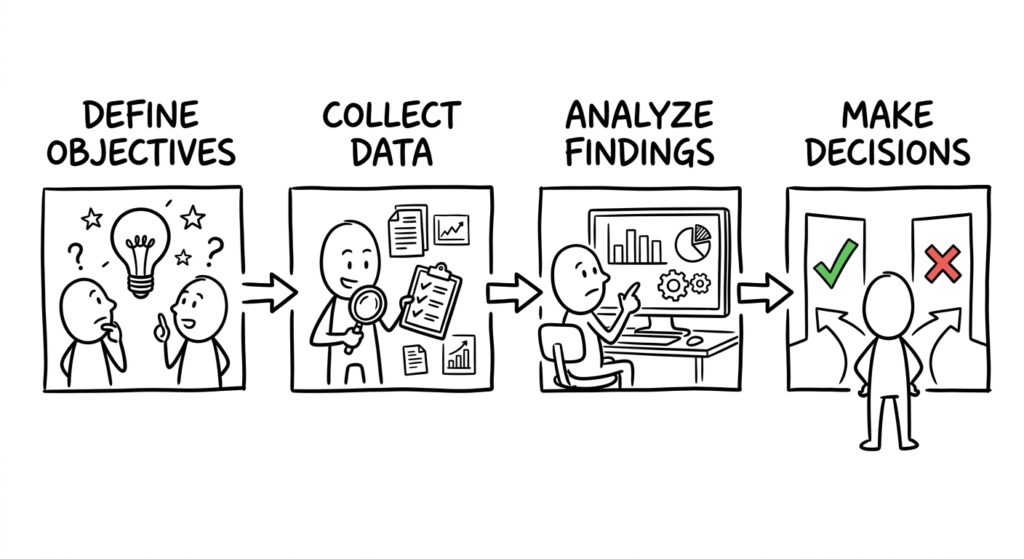
To minimize production risks and yarn waste, follow a standard 6-step testing workflow prior to bulk purchasing:
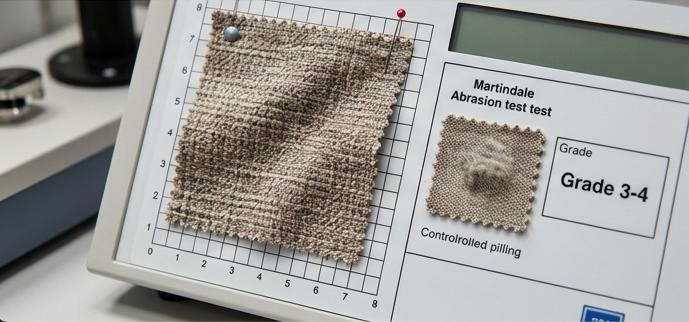
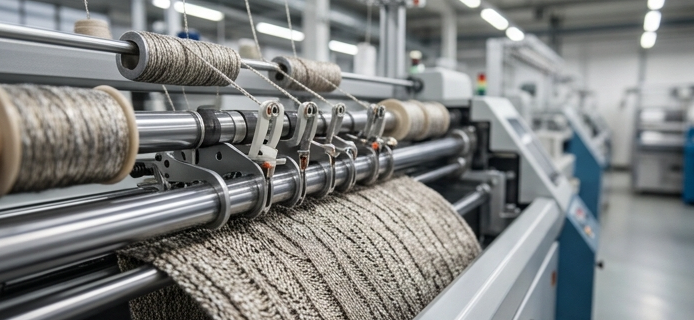
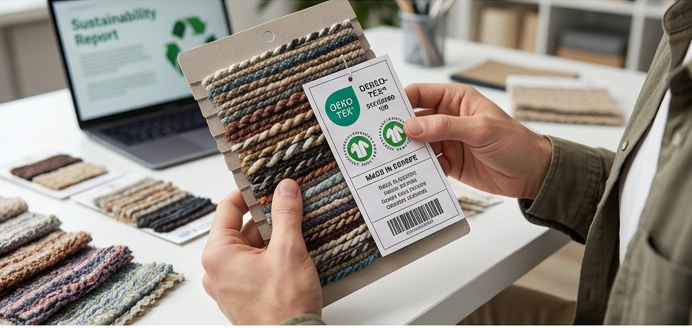
8. Visual Reference Guide for Production Evaluation
To assist quality control teams, the four evaluation stages are summarized below:
- Structural Consistency: Monitoring yarn feeding and tension on industrial flat knitting beds.
- Eco-Compliance: Verifying shade cards against OEKO-TEX® and REACH standards.
- Post-Processing Tests: Conducting Martindale abrasion and pilling evaluations on swatches.
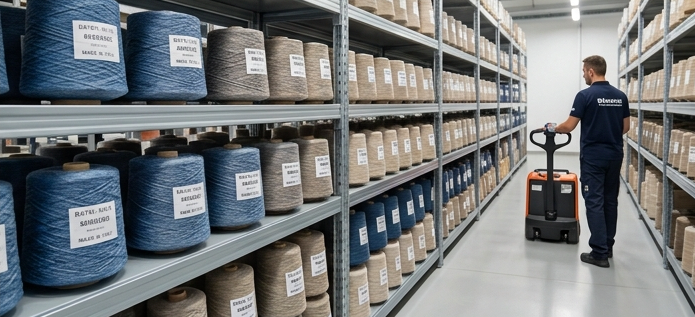
- Supply Chain Scale: Ensuring batch-to-batch color lot stability in warehouse inventory.
Common Mistakes in Fancy Yarn Sourcing
- Selecting solely by appearance: Ignoring twist stability and tensile strength under machine speed.
- Overlooking feeder compatibility: Failing to adjust tensioning devices for slub or loop variations.
- Evaluating yarn instead of fabric: Forgetting that wet finishing and washing significantly change yarn volume and hand feel.
- Focusing strictly on price per kg: Ignoring total yield, waste factors, and machine downtime costs.
- Bypassing small-scale trials: Ordering bulk quantities before testing swatch dimensional stability.
Practical Sourcing Checklist
Before approving a fancy yarn for bulk production, verify:
- Fiber composition & eco-certifications (OEKO-TEX / GOTS / REACH)
- Yarn count & twist stability
- Color consistency (Delta E tolerances across dye lots)
- Hand feel and surface texture after washing
- Machine compatibility & recommended gauge
- Pilling and dimensional shrinkage test results
- Packaging, cone weight, and lead times
- Supplier MOQ and custom development options
How Tongyang Yarn Supports Fancy Yarn Development
Tongyang Yarn engineered specialty and fancy yarns tailored for demanding textile applications. Rather than offering one-size-fits-all products, we collaborate directly with design and technical teams to match yarn structure with production requirements:
- Product Range: Fancy yarns, metallic yarns, high-gloss yarns, elastic specialty yarns, and blended functional structures.
- Custom Development: Custom spinning, shade matching, and sample swatch development to evaluate performance before bulk orders.