Crystal Yarn vs Metallic Yarn: What’s the Difference?
When designers want to add shine to a textile, two terms often appear in yarn sourcing:
Crystal yarn and metallic yarn.
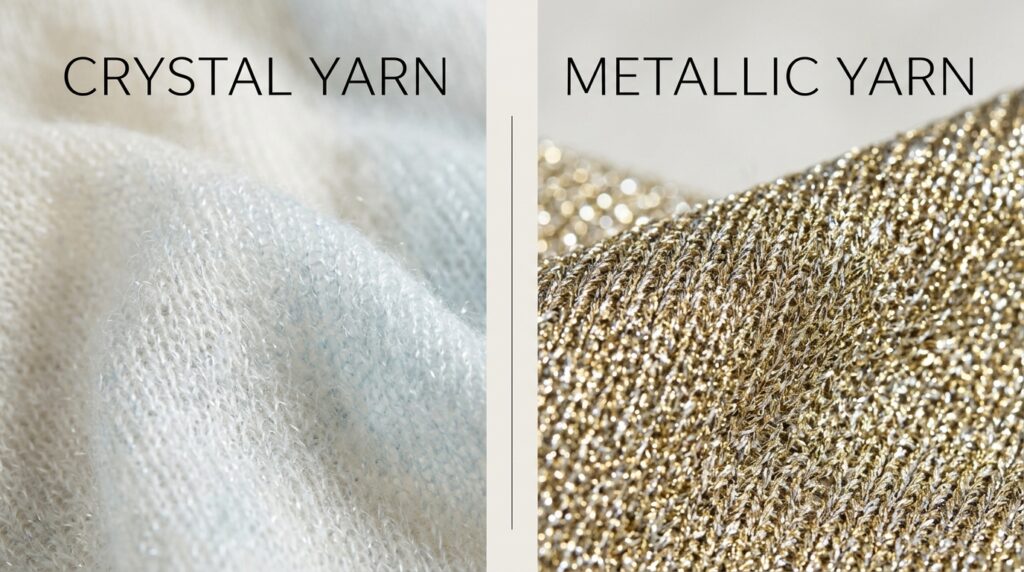
Both can create eye-catching effects, but they are not necessarily the same.
The difference becomes particularly important when developing knitwear because the choice of yarn affects not only the appearance of the fabric, but also its hand feel, structure, application and overall design language.
So, which should a designer choose?
The answer depends on the effect the final textile needs to achieve.
Crystal Yarn vs. Metallic Yarn at a Glance
| Feature | Crystal Yarn | Metallic Yarn |
|---|---|---|
| Main visual effect | Sparkle / crystal-like reflection | Metallic shine |
| Light behaviour | Scattered or sparkling highlights | More continuous reflective effect |
| Visual character | Decorative, delicate, dimensional | Clean, modern, luminous |
| Typical use | Fashion knitwear, accessories | Knitwear, jacquard, decorative textiles |
| Design intensity | Subtle to strong | Subtle to strong |
| Best design role | Sparkle accent | Metallic accent |
| Can be blended? | Yes, depending on construction | Yes |
| Custom development | Possible | Possible |
The exact appearance depends on the yarn construction and should always be evaluated from an actual sample.
What Is Metallic Yarn?
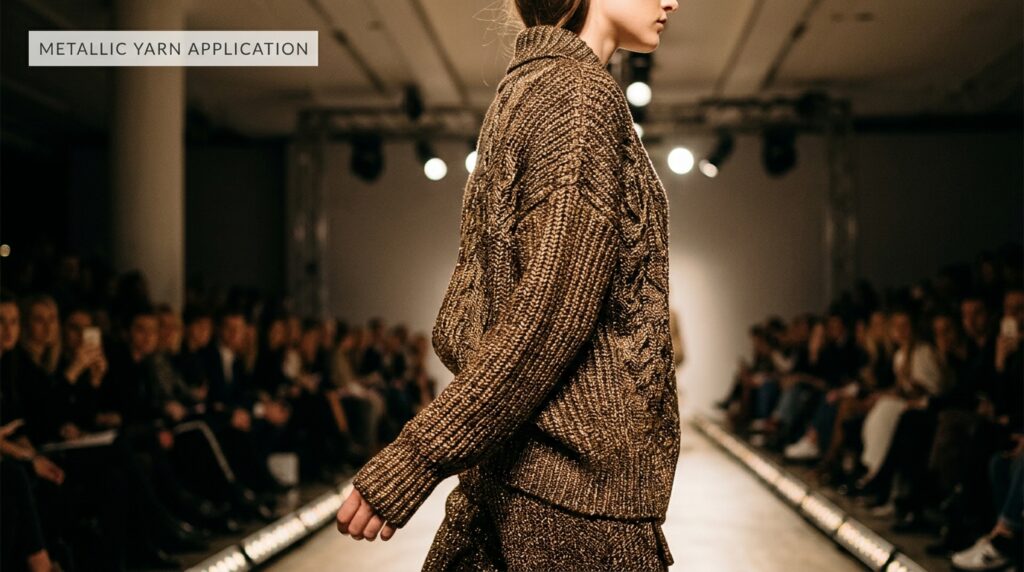
Metallic yarn is a specialty yarn designed to produce a metallic or reflective appearance.
It is commonly associated with:
- Gold
- Silver
- Copper
- Bronze
- Gunmetal
- Coloured metallic effects
Metallic yarn is often used when the designer wants a cleaner and more defined shine.
For example, a fine silver metallic yarn can create a precise highlight within a dark knitted fabric.
What Is Crystal Yarn?
Crystal yarn is generally designed to create a more sparkling or crystal-like visual effect.
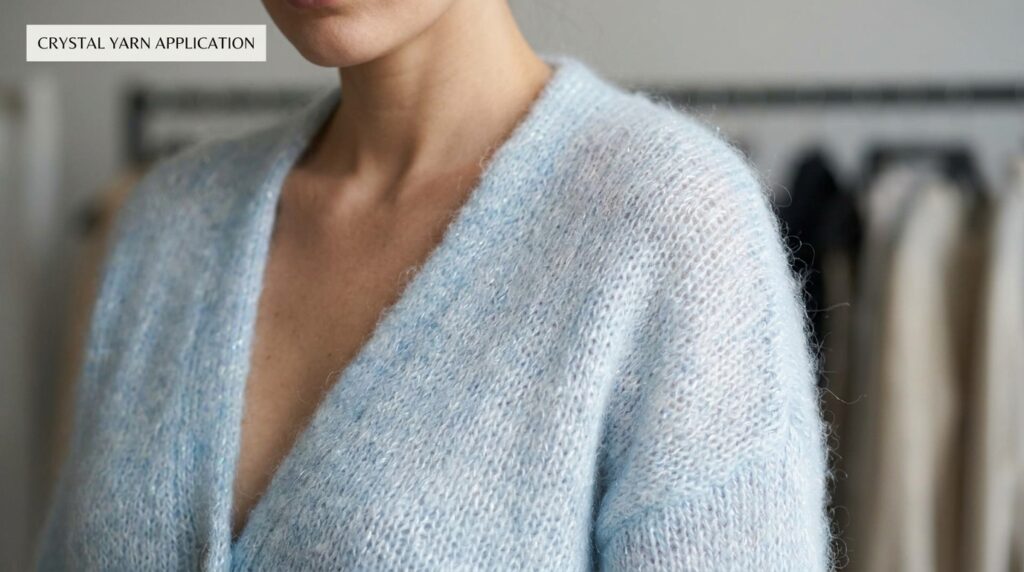
Instead of simply making the surface appear metallic, the yarn can create multiple small points of light as the fabric moves.
This can give the fabric a more:
- Sparkling
- Decorative
- Jewel-like
- Festive
- Fashion-oriented
appearance.
The Main Difference: How the Light Looks
The easiest way to understand the difference is to think about the type of light reflection.
Metallic yarn
The effect is generally:
smooth → reflective → metallic
Crystal-effect yarn
The effect is generally:
sparkling → scattered → dimensional
This distinction can influence the overall mood of the garment.
When Should You Choose Crystal Yarn?
Crystal yarn may be appropriate when the design requires:
- Sparkle
- Jewel-like highlights
- A softer decorative effect
- Festive appeal
- Fashion accessories
- Feminine or glamorous styling
For example, a winter scarf with subtle crystal sparkle can look decorative without appearing strongly metallic.
When Should You Choose Metallic Yarn?
Metallic yarn may be more suitable when the designer wants:
- A clean shine
- Gold or silver highlights
- Modern visual contrast
- Graphic details
- Jacquard effects
- Geometric patterns
Metallic yarn can work particularly well with dark colours because the contrast makes the reflective effect more visible.
Crystal vs Metallic in Knitwear
The final effect also depends on the fabric structure.
Consider a dark knitted sweater.
With metallic yarn
The result may look:
modern + clean + luminous
With crystal yarn
The result may look:
sparkling + textured + decorative
Neither effect is inherently better.
They simply communicate different design directions.
Crystal and Metallic Yarn Can Also Be Combined
Designers do not always have to choose one or the other.
Combining different specialty yarns can create more complex fabrics.
For example:
Base yarn + metallic yarn + crystal-effect yarn
can create three levels of visual depth:
- Base colour
- Metallic reflection
- Fine sparkling highlights
This can be useful for premium knitwear and statement accessories.
However, the yarn combination should be tested carefully to ensure the finished fabric remains comfortable and suitable for production.
Crystal Yarn vs Metallic Yarn: Application Examples
| Application | Crystal Yarn | Metallic Yarn |
|---|---|---|
| Sweaters | ✓ | ✓ |
| Cardigans | ✓ | ✓ |
| Scarves | ✓✓ | ✓✓ |
| Hats | ✓✓ | ✓ |
| Fashion accessories | ✓✓ | ✓✓ |
| Jacquard | ✓ | ✓✓ |
| Festive fashion | ✓✓ | ✓✓ |
| Minimalist knitwear | ✓ | ✓✓ |
| Statement fashion | ✓✓ | ✓✓ |
✓ = suitable; ✓✓ = particularly suitable depending on design
These are design-development guidelines rather than fixed rules. The final choice depends on yarn construction and fabric requirements.
What About Glitter Yarn?
Glitter yarn is another term frequently used by buyers and designers.
It generally refers to yarns that produce a visible sparkling or glitter-like appearance.
However, terminology is not always standardized across the textile industry.
One supplier’s “crystal yarn” may have a different construction from another supplier’s “glitter yarn”.
Therefore, professional sourcing should focus on:
- Yarn construction
- Fibre composition
- Yarn count
- Visual effect
- Fabric performance
- Production compatibility
rather than the product name alone.
How to Choose Between Crystal and Metallic Yarn
Ask five questions.
1. What type of shine do you want?
2. How strong should the effect be?
3. What is the target garment?
4. What is the base fabric?
5. How will it be knitted?
Gauge, machine type and fabric structure can all influence the final appearance.
Don’t Judge the Yarn Only From the Cone
A common mistake is approving specialty yarn based on the cone alone.
The actual visual effect can change after:
Yarn → Knitting → Washing → Finishing
A yarn that looks extremely sparkling on a cone may become much more subtle after knitting.
Conversely, a yarn that looks relatively simple may create an attractive effect in a textured stitch structure.
This is why fabric sampling is essential.
How Tongyang Yarn Helps Designers Compare Specialty Yarns
Tongyang Yarn supplies and develops:
- Crystal yarn
- Metallic yarn
- Fancy yarn
- Dual-curve yarn
- Blended yarn
- High-gloss yarn
- High-elastic yarn
- Functional yarn
For a new project, customers can compare different yarn constructions based on:
visual effect + fibre composition + fabric structure + application + production requirements.
This makes it easier to select the yarn according to the final product rather than simply the yarn catalogue description.
FAQ
FAQ
Conclusion
Crystal yarn and metallic yarn can both add shine to textiles, but they create different visual languages.
Crystal yarn → sparkle, highlights and decorative depth.
Metallic yarn → clean shine, reflection and modern contrast.
The most useful question is therefore not:
“Which yarn is better?”
It is:
“Which visual effect is right for this fabric and this collection?”
Explore crystal, metallic and other specialty yarn options with Tongyang Yarn for your next textile development project.