Dual-Curve & Blended Yarn: Combining Structure, Comfort and Visual Effects
A Practical Guide for European Knitwear and Textile Manufacturers
Modern textile development is increasingly moving toward yarns that can do more than one job.
Designers want visual interest.
Product developers want comfort.
Manufacturers want stable knitting performance.
Sourcing teams want commercially reasonable costs.
And consumers expect the final garment to feel different from conventional basic knitwear.
This is where dual-curve yarn and blended yarn can become interesting tools for product development.
Instead of treating yarn simply as a raw material, textile manufacturers can use yarn construction to influence the final fabric’s appearance, structure, elasticity, hand feel and performance.
What Is Blended Yarn?
Blended yarn combines two or more fibre types or material components to achieve a combination of properties.
Common examples include:
- Cotton / polyester
- Wool / acrylic
- Cotton / viscose
- Polyester / viscose
- Wool / nylon
- Various specialty fibre combinations
The objective is not necessarily to make one fibre replace another.
Instead, blending can be used to balance different characteristics.
For example:
Natural fibre → comfort and hand feel
Synthetic fibre → strength and dimensional stability
Specialty fibre → additional functional or visual characteristics
The final result depends heavily on the fibre ratio and yarn construction.
Why Are Blended Yarns Important?
A single fibre rarely provides every property required by a modern garment.
A product developer may want:
- Soft hand feel
- Strength
- Elasticity
- Dimensional stability
- Colour depth
- Easy care
- Durability
- Controlled cost
- Specific visual effects
Blending provides a way to balance several requirements.
Research on hybrid yarn applications also shows that engineered yarn combinations can support apparel, sportswear, functional clothing and outerwear applications.
What Is Dual-Curve Yarn?
Dual-curve yarn can be understood as a specialty yarn construction designed to create a distinctive two-directional or dual-effect visual/structural appearance.
The exact construction should always be confirmed with the yarn manufacturer because “dual-curve” can refer to different technical constructions depending on the production method.
From a product-development perspective, its value is the same:
It can create a more dynamic surface than a conventional uniform yarn.
Instead of producing a completely flat visual effect, the yarn structure can introduce movement, curvature or dimensional variation into the knitted or woven surface.
This makes it particularly interesting for fashion knitwear and specialty textile development.
Dual-Curve Yarn vs Conventional Yarn
A conventional yarn generally aims for consistency.
A specialty dual-curve construction aims to introduce a controlled visual or structural effect.
| Feature | Conventional yarn | Dual-curve / specialty yarn |
|---|---|---|
| Surface | Relatively uniform | More dynamic |
| Visual effect | Stable | Dimensional / directional |
| Design role | Base material | Design element |
| Fabric appearance | Predictable | More expressive |
| Application | Basic textiles | Fashion / specialty textiles |
The key word is controlled.
The effect should be repeatable enough for industrial production.
Why Combine Dual-Curve With Blended Yarn?
This is where product development becomes more interesting.
Dual-curve construction can contribute visual and structural effects.
Blending can help adjust:
- Softness
- Strength
- Elasticity
- Drape
- Surface appearance
- Durability
- Cost-performance balance
Combining the two approaches can therefore create a yarn that offers both design value and functional value.
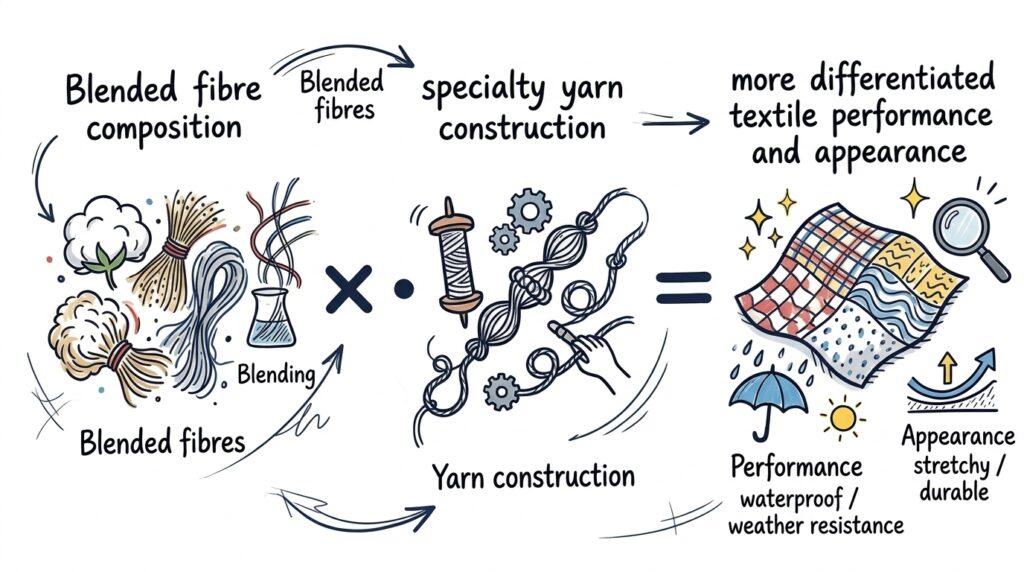
This approach is particularly relevant to brands looking for alternatives to conventional basic yarns.
1. For Fashion Knitwear
Fashion knitwear is one of the most natural applications.
Dual-curve effects can help create:
- Textured sweaters
- Fashion cardigans
- Statement knitwear
- Decorative panels
- Striped structures
- Contemporary knit accessories
The yarn itself becomes part of the design language.
2. For Premium Everyday Wear
Not every specialty yarn needs to create an obvious visual effect.
A more subtle construction can be used to create texture that becomes visible only after knitting.
This can be valuable for brands looking for:
“premium, but not overly decorative.”
The result can be more sophisticated than a standard plain yarn without becoming too fashion-forward.
3. For Colour Effects
Blended yarn can also influence colour perception.
When different fibres or yarn components interact with the same fabric structure, the final surface can show greater colour depth or subtle contrast.
For example:
- Dark grey + silver effect
- Burgundy + metallic accent
- Brown + natural fibre tone
- Khaki + muted specialty effect
This works particularly well with AW collections where deep, atmospheric colours are important. European AW 2026/27 trend research highlights deep brown, khaki and burgundy among important colour directions.
4. For Comfort and Performance
Blended yarns are not only about appearance.
The fibre combination should be selected according to the end product.
A sportswear or functional garment may prioritize:
- Moisture management
- Elastic recovery
- Strength
- Abrasion resistance
- Dimensional stability
A fashion sweater may prioritize:
- Softness
- Drape
- Texture
- Warmth
- Visual depth
A premium accessory may prioritize:
- Hand feel
- Appearance
- Colour
- Lightweight construction
Therefore, the question should not be:
“Which blended yarn is cheapest?”
It should be:
“Which yarn construction provides the right combination of properties for this product?”
5. Machine Compatibility Still Matters
Specialty yarn should always be evaluated on the actual production equipment.
Important factors include:
- Machine gauge
- Yarn feeding
- Tension
- Knitting speed
- Stitch structure
- Yarn count
- Fabric density
- Finishing process
A yarn that looks excellent in a hand sample may behave differently during machine knitting.
This is why sampling is an essential part of product development.
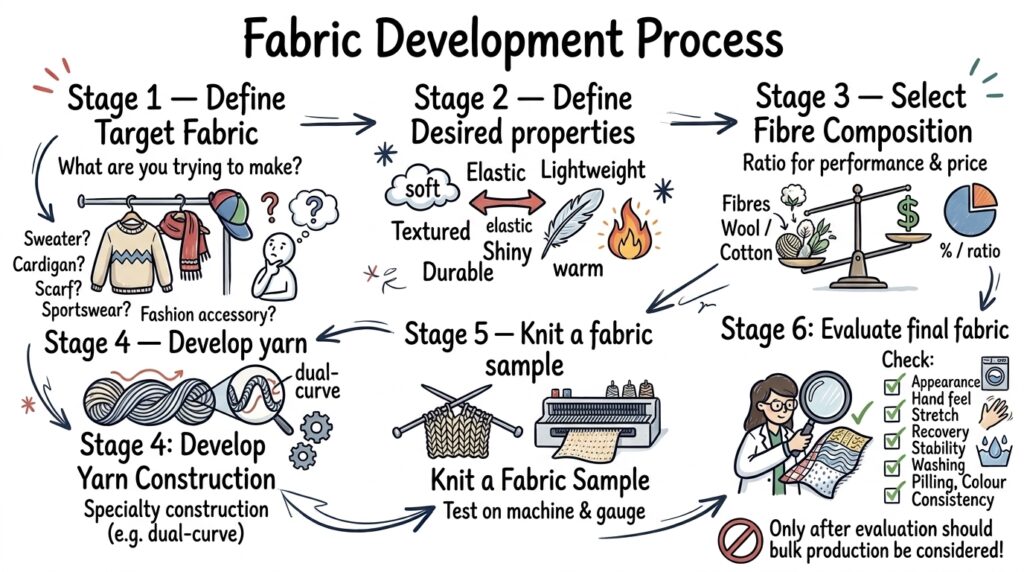
How to Develop a Dual-Curve or Blended Yarn
A practical development process can be divided into six stages.
Common Mistakes When Developing Specialty Blended Yarn
Mistake 1: Choosing fibre composition first
Fibre composition is important, but yarn construction can be equally important.
Two yarns with similar fibre ratios can produce very different fabrics.
Mistake 2: Looking only at yarn appearance
The finished fabric is what the consumer sees.
Mistake 3: Ignoring machine conditions
Specialty yarn may require different knitting settings.
Mistake 4: Trying to solve everything with one yarn
Sometimes the best result comes from combining a specialty yarn with a conventional base yarn.
Mistake 5: Ordering bulk before sampling
A small development order can prevent expensive production problems later.
Dual-Curve + Blended Yarn: A Simple Product Development Model
A useful way to think about specialty yarn development is:
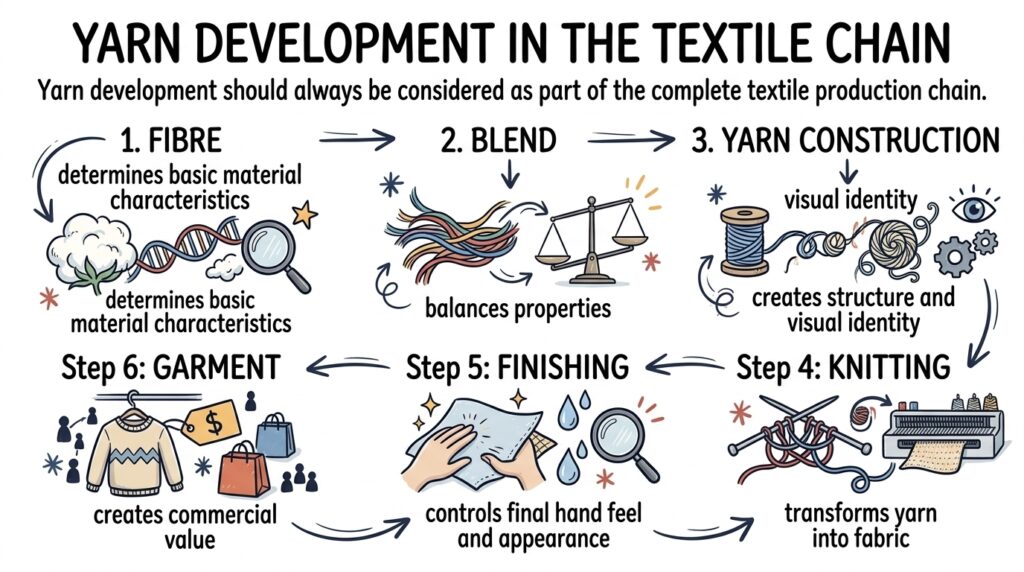
This is why yarn development should always be considered as part of the complete textile production chain.
How Tongyang Yarn Approaches Specialty Yarn Development
Tongyang Yarn works with fancy and specialty yarns for textile and knitwear applications.
Our product range and development direction includes:
- Fancy yarn
- Dual-curve yarn
- Blended yarn
- Metallic yarn
- High-gloss yarn
- High-elastic yarn
- Functional yarn
- Other customized specialty yarns
For new projects, customers can discuss the intended application, fibre composition, yarn count, colour, effect and production requirements.
Sample development allows buyers to evaluate the actual fabric before moving to larger production quantities.
TONGYANG BLENDED YARN
Innovation, Quality, Sustainability
We are committed to inspiring creativity
through yarns that enhance design, deliver lasting quality, and embrace sustainability.
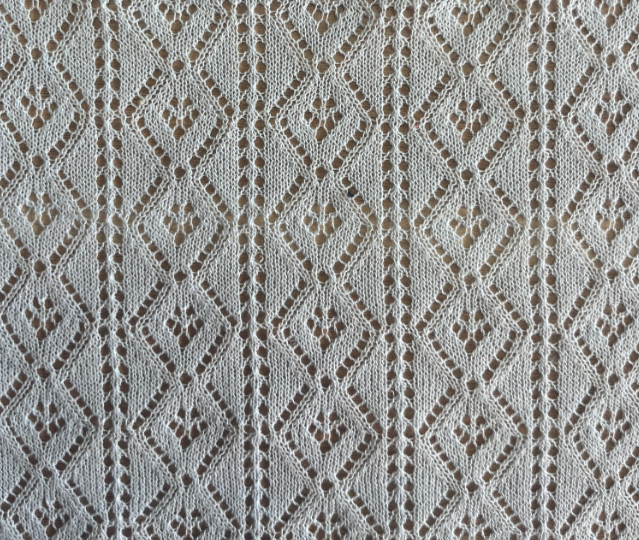
Type: C86 RE-P14
Color: Light Blue (#24120151)
Note: Cotton & polyester blend
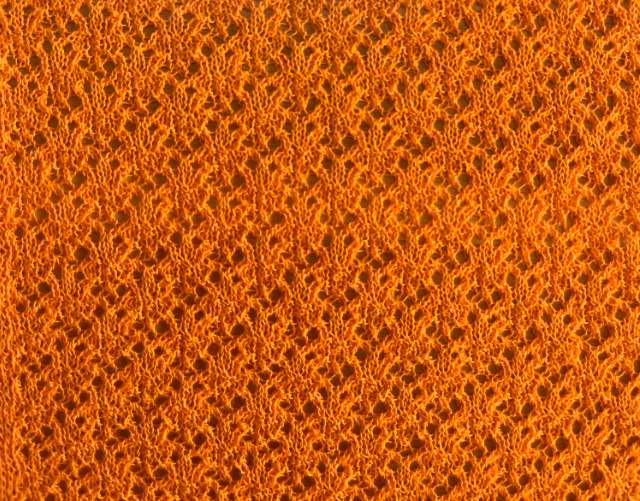
Type: V82 STEEL18
Color: Light Gray (#92781-24110255)
Note: Viscose & steel blend
When Should You Choose Dual-Curve Yarn?
Dual-curve yarn may be worth considering when:
☐ A standard yarn looks too basic
☐ You want a more dimensional fabric surface
☐ You need a specialty visual effect
☐ You are developing fashion knitwear
☐ You want to differentiate a new collection
☐ You want to combine fibre performance with visual effects
☐ You need a customized yarn rather than an off-the-shelf product
FAQ
Conclusion
The future of specialty yarn is not simply about creating unusual effects.
It is about combining structure, material and performance.
Dual-curve yarn can contribute visual and structural differentiation, while blended yarn can help balance the functional and tactile characteristics of the final textile.
Together, these approaches give designers and textile manufacturers more freedom to develop fabrics that are:
More distinctive. More functional. More commercially relevant.
For European textile manufacturers developing new knitwear collections, specialty yarn development can be an effective way to move beyond standard commodity yarns.
Have a new yarn concept in mind? Contact Tongyang Yarn to discuss your fibre composition, yarn construction and sample requirements.