Dual-Curve Yarn for Knitwear: How to Create 3D Texture and Visual Movement
In modern knitwear, color and silhouette are only part of the design story. Texture, surface interest, and yarn structure are becoming increasingly important for fashion brands and textile manufacturers looking to create distinctive products.
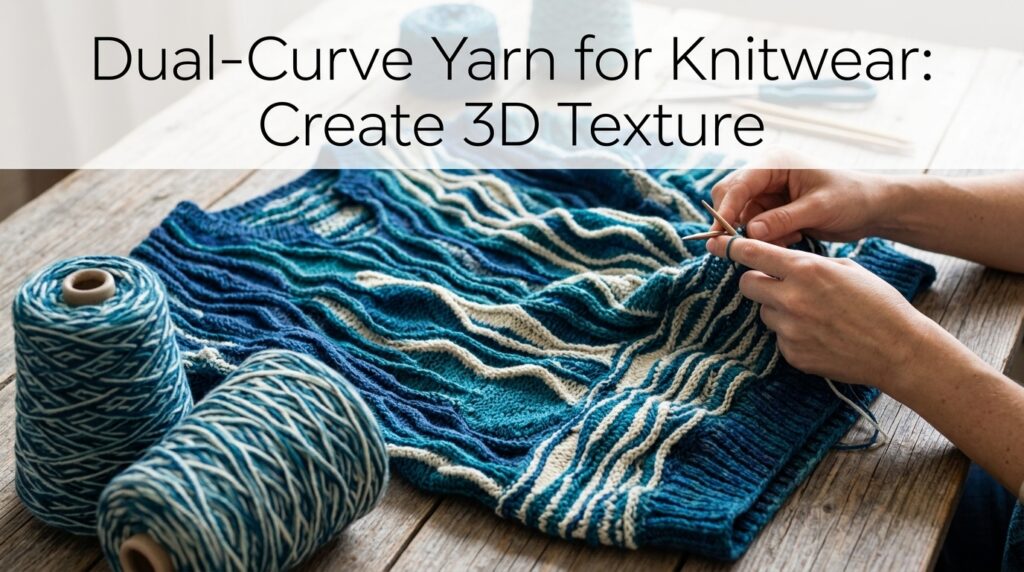
For designers and knitwear manufacturers who want to add three-dimensional texture and visual movement, dual-curve yarn offers an interesting alternative to conventional smooth or novelty yarns.
By incorporating a controlled curved structure into the yarn, dual-curve yarn can create a more dynamic surface when knitted into sweaters, cardigans, scarves, accessories, and other fashion textiles.
In this guide, we look at how dual-curve yarn works, where it can be used, and what textile buyers should consider when developing it for knitwear production.
Why Yarn Structure Matters in Knitwear
The appearance of a knitted fabric is influenced not only by the fiber content but also by the structure of the yarn itself.
Even when two yarns are made from similar fibers, they can produce very different fabrics because of differences in:
- Yarn structure and construction
- Yarn count and thickness
- Twist and surface characteristics
- Texture and loft
- Luster and light reflection
- Drape and fabric hand
This is one reason why fancy yarns and specialty yarns are widely used in fashion knitwear.
Instead of creating all the visual interest through complicated stitch structures or additional embellishment, designers can use the yarn itself as part of the design.
For manufacturers, this can also provide more flexibility when developing new textures and fabric effects.
If you are looking for other specialty yarn structures, you can explore the Tongyang Yarn product range for different options for fashion and textile applications.
What Is Dual-Curve Yarn?
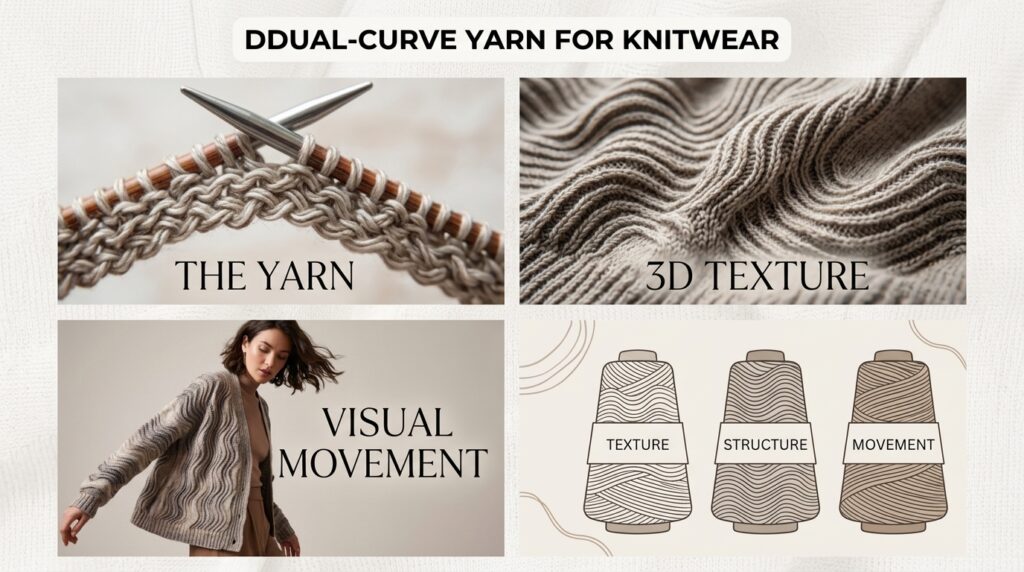
Dual-curve yarn is a type of specialty or fancy yarn designed with a recurring curved or wave-like structure along the yarn.
When knitted into fabric, the curved structure creates variations across the surface, giving the fabric a more dimensional and visually interesting appearance than a conventional smooth yarn.
Depending on the yarn construction, knitting gauge, stitch structure, and combination with other yarns, dual-curve yarn can contribute to several design effects:
- Three-dimensional texture – adds visible and tactile surface interest.
- Visual movement – creates a more dynamic appearance across the knitted fabric.
- Light and shadow effects – curved surfaces can produce subtle changes in appearance as the fabric moves.
- Distinctive hand feel – the yarn structure can contribute to a fuller and more textured fabric character.
The final effect depends heavily on the yarn specification and knitting process, so sampling is an important part of product development.
How Does Dual-Curve Yarn Create 3D Texture?
One of the main advantages of dual-curve yarn is that the yarn structure itself contributes to the final fabric appearance.
With a conventional smooth yarn, the knitted surface tends to look relatively uniform. A structured yarn introduces more variation into the surface, creating areas of higher and lower texture.
For example:
Smooth yarn:
Uniform yarn structure → relatively even knitted surface
Dual-curve yarn:
Curved yarn structure → more texture → greater visual depth and movement
This makes dual-curve yarn particularly interesting for fashion collections where texture is an important part of the overall design.
The effect can be subtle and refined or more pronounced, depending on the yarn construction and how it is used in the fabric.
Applications of Dual-Curve Yarn in Knitwear
Dual-curve yarn can be used in a range of knitted products, particularly where surface texture is an important design feature.
1. Sweaters and Cardigans
Dual-curve yarn can add texture to otherwise simple silhouettes.
For minimalist sweaters or cardigans, using a textured yarn can create visual interest without requiring an overly complicated garment construction.
2. Fashion Knitwear
For seasonal fashion collections, designers can combine dual-curve yarn with different colors, gauges, or stitch structures to develop distinctive surface effects.
It can be used throughout a garment or introduced selectively in specific areas.
3. Scarves and Accessories
Accessories are another suitable application because texture is often a key part of their visual and tactile appeal.
Dual-curve yarn can be used for scarves, hats, knitted accessories, and other products where a more distinctive surface is desired.
4. Decorative Knitwear
For premium or statement collections, dual-curve yarn can be combined with other specialty yarns to create more complex visual effects.
This makes it particularly useful for designers developing fancy knitwear and decorative textile products.
You can also explore Tongyang Yarn’s textile applications to see how specialty yarns can be developed for different textile products.
Using Dual-Curve Yarn with Other Yarns
Dual-curve yarn does not necessarily need to be used on its own.
For many textile developments, combining a specialty yarn with a more conventional yarn can provide a good balance between appearance, performance, and production requirements.
Dual-Curve Yarn + Basic Yarn
A standard cotton, viscose, wool, acrylic, or blended yarn can provide the main fabric structure, while dual-curve yarn is introduced as an accent.
For example, it can be used in:
- Selected panels
- Stripes
- Borders
- Collar or cuff details
- Decorative sections
This approach allows designers to highlight the textured yarn without making the entire fabric overly complex.
Dual-Curve Yarn + Metallic Yarn
For fashion collections, dual-curve yarn can also be combined with metallic yarn or high-luster yarn.
The textured structure provides surface interest, while the metallic component adds highlights and shimmer.
This combination can work particularly well for:
- Evening knitwear
- Holiday collections
- Festive fashion
- Fashion accessories
- Decorative knit fabrics
If your project requires both texture and shine, you may also be interested in metallic yarn for fashion textiles.
Dual-Curve Yarn for Premium and Fashion Knitwear
Texture is especially important in premium knitwear because consumers often evaluate garments through both visual appearance and touch.
A well-designed textured yarn can help create a fabric that feels more distinctive and visually engaging.
For fashion brands, this can be useful when developing seasonal collections where the goal is to create new fabric stories without completely changing the garment silhouette.
For textile manufacturers, specialty yarns can also provide additional possibilities during fabric development and sampling.
The key is to find the right balance between yarn structure, knitting technique, fabric weight, and end-use requirements.
What Should Textile Buyers Consider Before Production?
Before placing a production order, we recommend testing the yarn on the actual knitting equipment and fabric construction that will be used.
Several factors should be considered.
1. Knitting Performance
Test the yarn on the intended flat knitting or circular knitting machine.
Check yarn feeding, tension, guides, needles, and overall running performance.
The suitable machine settings may vary depending on the yarn construction and specification.
2. Fabric Appearance
Produce a small fabric swatch and evaluate:
- Surface texture
- Pattern definition
- Dimensional effect
- Overall appearance
- Consistency across the fabric
A yarn that looks interesting on a sample card may produce a different effect once knitted into a larger fabric.
3. Washing and Finishing
The fabric should also be tested after the intended washing, steaming, or finishing process.
This helps determine whether the desired texture and appearance are maintained after processing.
4. Hand Feel
For garments worn directly against the skin, hand feel is particularly important.
The final fabric should be evaluated for softness, comfort, and overall tactile quality.
5. Dimensional Stability
Depending on the yarn construction and fabric structure, testing should also consider shrinkage, fabric stability, skewing, and other characteristics relevant to the finished product.
Mastering 3D Surface Dynamics in Knitwear Design
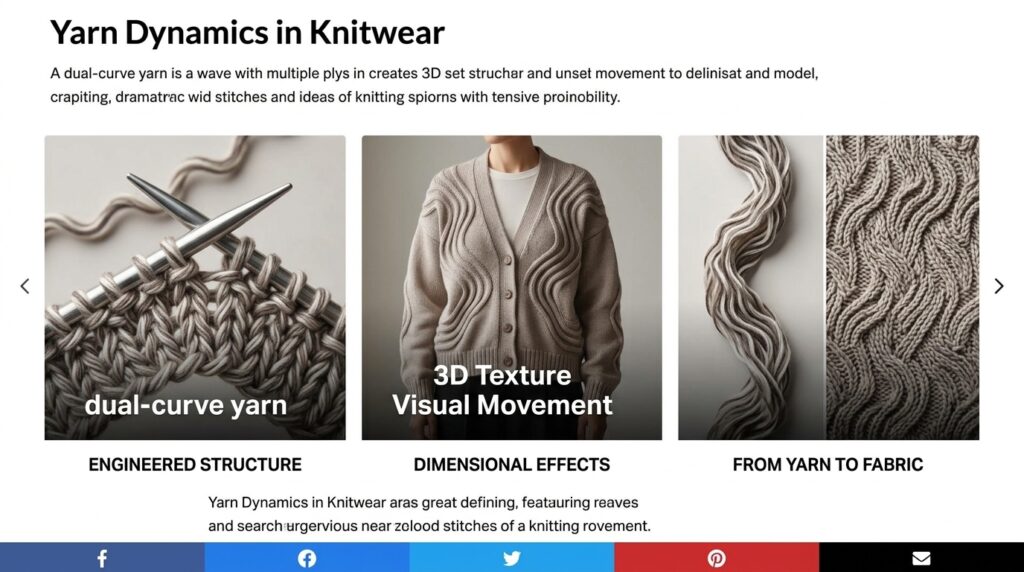
Conventional smooth yarns yield uniform, two-dimensional fabric surfaces. In contrast, dual-curve yarn introduces deliberate structural variation that elevates everyday knitwear into statement pieces.
Standard Smooth Yarn:   [ Uniform, Flat Surface ]
Dual-Curve Yarn:        [ Volumetric, 3D Wave Topography ]
This dynamic surface structure is particularly effective for:
- Statement Sweaters & Cardigans: Adds rich texture to clean, minimalist shapes.
- Heavy-Gauge Outerwear: Creates cozy, high-volume loft without adding excess weight.
- Luxe Scarves & Accessories: Delivers immediate shelf appeal and tactile comfort.
Creative Blending: Pairing Dual-Curve Yarn with Complementary Fibers
Dual-curve yarn does not need to be used in isolation. Combining it with secondary yarns unlocks unlimited creative possibilities while keeping production costs optimized.
Consider these high-impact combinations:
- Base + Accent Feeds: Use a standard combed cotton or merino base yarn for garment structure, introducing dual-curve yarn in targeted panels, stripes, or trim accents.
- Elastic Blends: Combine with spandex/elastane cores for form-fitting garments that retain high volumetric texture under tension.
- Lurex & Metallic Accents: Pair dual-curve geometry with high-gloss filament or metallic fibers (gold/silver thread) to amplify light reflection across the curved peaks.
Elevating Eveningwear: Dual-Curve Meets Metallic Luster
For holiday capsule collections, eveningwear, and festive knitwear, blending dual-curve yarn with metallic or trilobal glossy filaments creates a captivating visual effect.
The physical curves scatter light in multiple directions, while the metallic elements deliver controlled glint and shimmer. This combination yields a sophisticated, high-end look suitable for high-margin fashion lines.
Quality Control & Mill Testing Checklist
To ensure seamless production when introducing dual-curve yarn to your knitting floor, sourcing teams and textile technicians should conduct preliminary sampling across five key areas:
- Knitting Feeder Performance: Test yarn tensioners and guides on flat-knitting (e.g., Stoll, Shima Seiki) or circular machines to prevent snagging.
- Post-Wash Appearance: Evaluate the fabric swatch after wet processing or steam整烫 (steaming) to confirm the 3D texture remains stable.
- Tactile Hand Feel: Verify that the blended yarn maintains a soft, non-abrasive touch against the skin.
- Dimensional Stability & Spirality: Ensure the non-linear structure does not introduce unwanted torque or skewing into the knitted panel.
- Colorway & Luster Consistency: Inspect how light reflects off the crests of the curves across different lighting environments.
How to Choose a Dual-Curve Yarn Supplier
When sourcing specialty yarn, price and color are only part of the decision.
For textile manufacturers and fashion brands, it is often more important to work with a supplier that can support the development process from the initial idea through sampling and production.
Key points to consider include:
- Clear yarn specifications and technical data
- Consistent yarn construction
- Sample development capability
- Color matching and customization
- Flexible production quantities
- Stable lead times
- Consistent quality between batches
- Technical communication during sampling
This is particularly important for custom fancy yarn development, where the final product may need to be adjusted according to the customer’s knitting equipment, fabric construction, and target appearance.
Custom Dual-Curve Yarn Development
Every knitwear project has different requirements.
A fashion brand may be looking for a subtle textured effect, while a knitting mill may need a specific yarn structure that performs well on a particular machine.
For this reason, custom development can be an important part of specialty yarn sourcing.
Depending on the project, customization may involve:
- Yarn structure
- Yarn count
- Color
- Fiber combination
- Surface effect
- Metallic or high-luster components
- End-use application
At Tongyang Yarn, we work with textile buyers and manufacturers on specialty yarn development for fashion and textile applications.
If you have a specific yarn structure or fabric effect in mind, you can contact Tongyang Yarn to discuss your requirements and request samples.
Final Thoughts
Dual-curve yarn for knitwear provides designers and textile manufacturers with another way to create texture, depth, and visual movement directly through yarn structure.
It can be used in sweaters, cardigans, scarves, accessories, and decorative knitwear, either on its own or together with basic, metallic, or other specialty yarns.
The most important step is to test the yarn in the intended fabric construction before moving into bulk production. Yarn structure, knitting parameters, finishing, and end-use requirements all influence the final result.
For brands and manufacturers looking for distinctive fancy yarn and specialty yarn solutions, dual-curve yarn can be an interesting option for developing new textures and seasonal textile collections.
Interested in developing a custom dual-curve yarn?
Explore Tongyang Yarn’s specialty yarn products or contact our team to discuss your project and request samples.