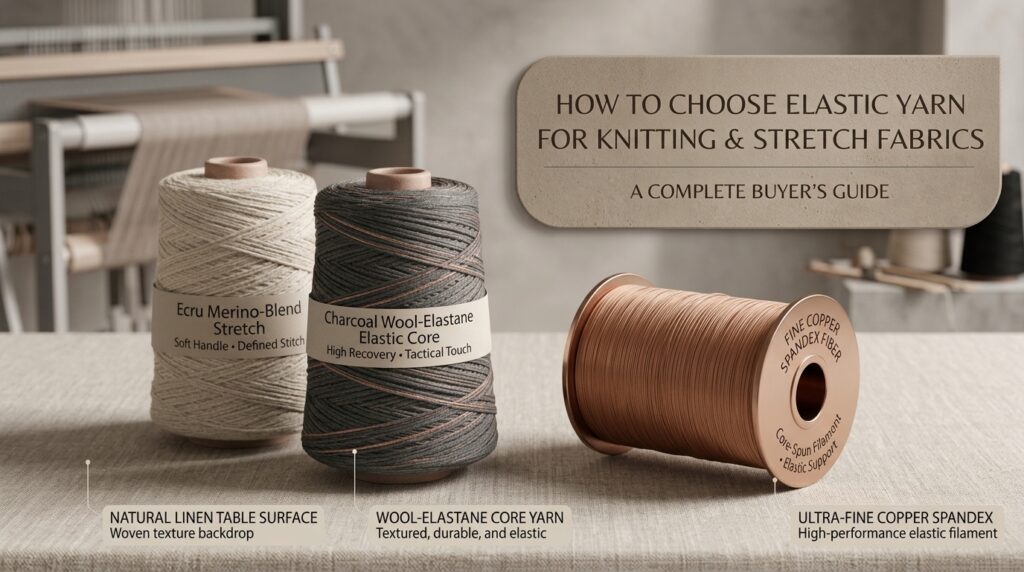
How to Choose Elastic Yarn for Knitting and Stretch Fabrics: A Complete Buyer’s Guide
In the modern textile industry, stretch and recovery are no longer optional—they are essential performance criteria. From high-performance activewear and seamless athleisure to medical textiles and durable denim, selecting the right elastic yarn for knitting directly dictates fabric hand-feel, dimensional stability, and production efficiency.
For textile manufacturers, apparel brands, and fabric engineers, choosing an unsuitable stretch yarn can lead to costly quality issues, such as fabric sagging, uneven dye uptake, or yarn breakage during high-speed knitting.
This comprehensive guide breaks down the core parameters for selecting the ideal elastic yarn based on stretch requirements, fabric structures, applications, and supplier evaluation.
1. Understanding Stretch Requirements: Elasticity vs. Recovery
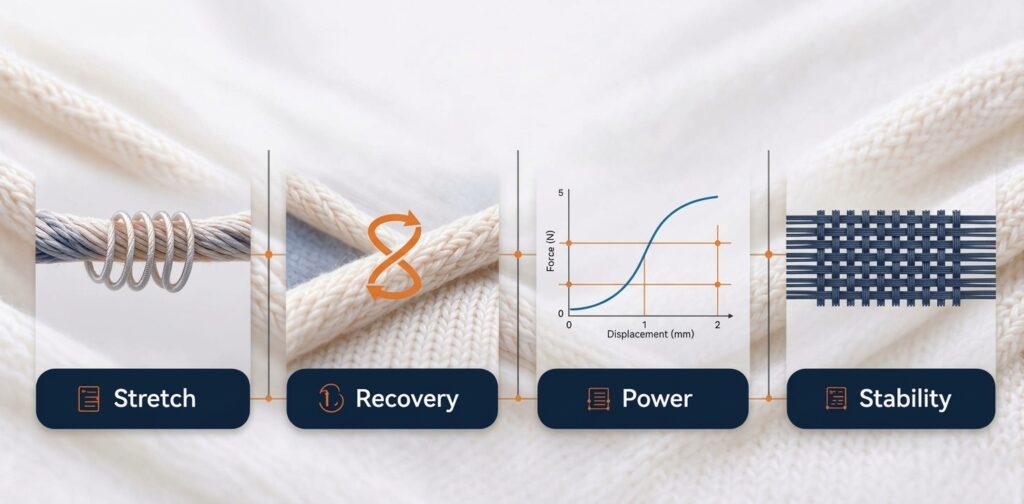
When evaluating high elastic yarn, B2B buyers must distinguish between two key properties: elongation (stretch percentage) and elastic recovery rate.
| Parameter | What It Measures | Why It Matters for Buyers |
| Elongation (Stretch %) | The degree to which yarn stretches under tension. | Determines garment fit and freedom of movement. |
| Elastic Recovery (%) | The ability of yarn to return to its original length after stretching. | Prevents fabric bagging, sagging, and deformation over time. |
Selecting by Stretch Level:
- Low to Medium Stretch (10% – 30%): Best for structured knitwear, dress shirts, and light denim where subtle comfort stretch is required without distorting garment silhouette.
- High Stretch (30% – 100%+): Essential for swimwear, activewear, compression wear, and seam-free knits requiring maximum shape retention and body contouring.
2. Matching Elastic Yarn to Fabric Structures
The interaction between your chosen elastic yarn for knitting and the knitting machine structure determines overall fabric torque, weight, and elasticity.
A. Circular Knitting: Single Jersey and Double Jersey
Recommended Yarns: Covered elastane yarns (spandex/elastane covered with nylon or polyester) and mechanical-stretch yarns such as PBT and PTT.
Circular knitting is widely used in apparel, sportswear, underwear, and other stretch fabrics. Covered elastane yarns provide consistent elasticity, while PBT and PTT yarns offer mechanical stretch for applications where moderate elasticity and dimensional stability are required.
Key Consideration: Precise yarn feeding and tension control are essential. Excessive or uneven tension can lead to fabric spirality, edge curling, and inconsistent stretch performance. Proper machine adjustment helps maintain fabric uniformity and improves overall production quality.
B. Warp Knitting: Tricot and Raschel
Recommended Yarns: High-tenacity bare elastane yarns and air-covered yarns (ACY).
Warp knitting requires yarns that can withstand continuous feeding at high speeds while maintaining consistent tension across multiple ends. Bare elastane offers excellent stretch potential, while air-covered yarns combine elastane with another filament to improve handling and processing stability.
Key Consideration: Yarn uniformity and tensile consistency are critical for high-speed production. Variations in yarn quality or tension can cause end breakage, machine downtime, and fabric defects. Selecting reliable yarns with consistent elongation and strength helps improve production efficiency and fabric consistency.
C. Seamless and Flat Knitting: Sweaters, Socks, and Shaped Garments
Recommended Yarns: Core-spun elastic yarns and plated yarns incorporating rubber or spandex.
Seamless and flat knitting applications often require targeted stretch and recovery in specific areas of a garment. Elastic yarns are commonly used in sock cuffs, sweater waistbands, collars, and other sections where a secure fit and lasting shape retention are essential.
Key Consideration: Excellent stretch recovery is crucial for maintaining garment fit over repeated wear and washing. The yarn must provide sufficient elasticity without compromising softness, comfort, or fabric appearance. Proper yarn selection and plating control help prevent loose cuffs, stretched-out waistbands, and unwanted deformation.
3. Core Elastic Yarn Types and Their Best Applications
To optimize sourcing decisions, fabric developers usually choose between three primary elastic yarn constructions:

- Air-Covered Yarn (ACY): Created by fusing spandex with filament fiber using compressed air. Offers great cost efficiency and smooth processing for everyday wear.
- Single/Double Covered Yarn (SCY/DCY): Filament yarn is wrapped around a spandex core. Delivers exceptional power, durability, and protection against spandex breakdown during dyeing and washing.
- PBT/PTT Polyester Stretch Yarns: Mechanical stretch yarns that offer moderate elasticity with superior chlorine resistance, UV protection, and ease of dyeing. Ideal for swimwear and sportswear.
4. Key Factors When Choosing a Reliable Elastic Yarn Supplier
Partnering with an experienced elastic yarn supplier is as important as choosing the right fiber specification. When evaluating potential global manufacturing partners, consider the following checklist:
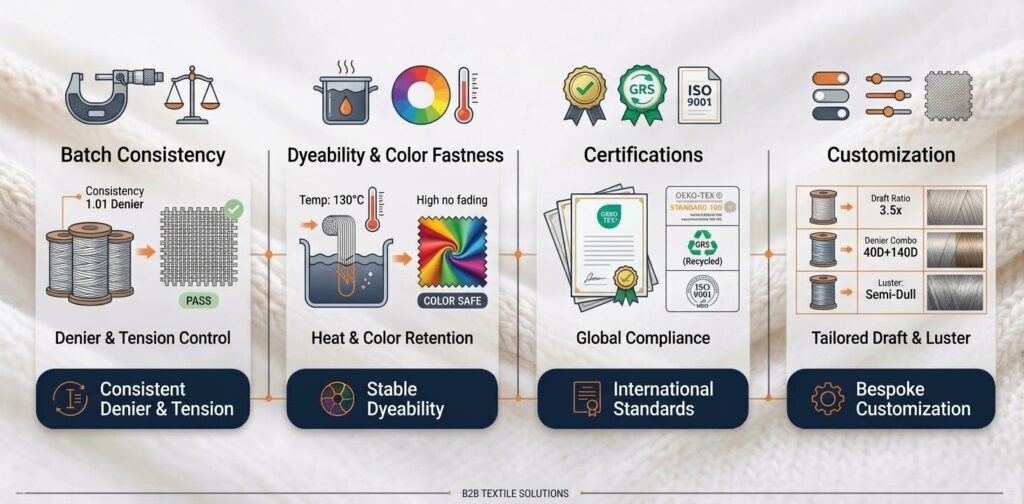
- Batch-to-Batch Consistency: Ensure strict quality control for yarn linear density (denier/dtex) and stretch tension to avoid shade bar variations and uneven fabric width.
- Dyeability & Color Fastness: Elastic yarns must withstand required dyeing temperatures without losing recovery properties.
- Certifications: Look for international standards such as OEKO-TEX Standard 100, GRS (Global Recycled Standard), and ISO 9001 to meet North American and European compliance standards.
- Customization Capabilities: A reliable supplier should offer custom draft ratios, denier combinations, and luster options (Bright, Semi-Dull, Full-Dull).
FAQ
Expert answers to common technical, manufacturing, and compliance questions regarding stretch yarn selection.
Final Recommendation
Selecting the correct elastic yarn for knitting requires balancing stretch performance, fabric construction, end-use requirements, and manufacturing budget. Whether you are developing high-compression activewear or soft touch everyday apparel, testing yarn samples under real production conditions is essential.
Looking for premium stretch yarn solutions tailored to your production needs?
Contact Us today to request custom samples and technical specification sheets for your next development project.