2026 Autumn/Winter Textile Trends: Metallic & Fancy Yarns
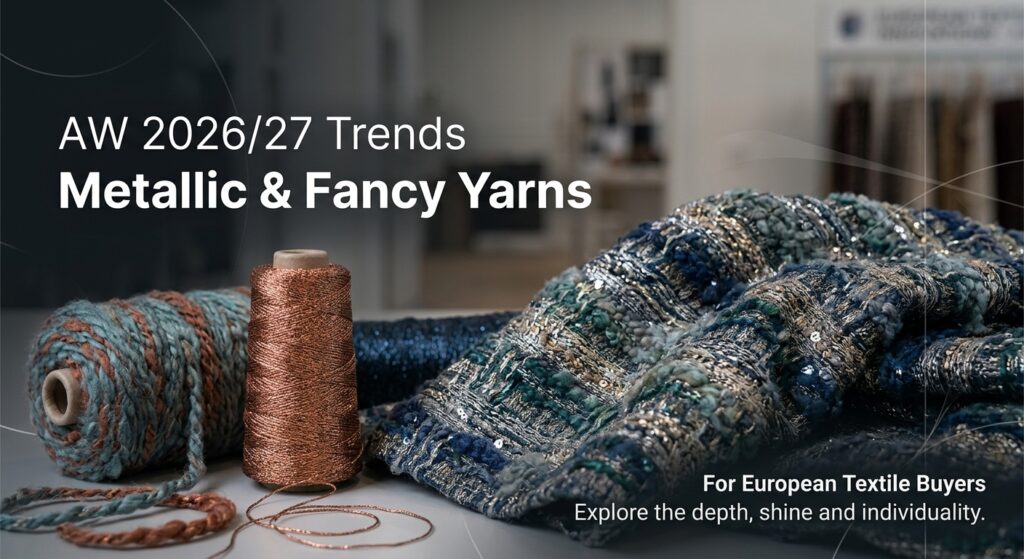
The Autumn/Winter 2026/27 season is moving beyond simple minimalism.
Across European fashion and textile collections, designers are exploring texture, craftsmanship, depth, shine and individuality. Instead of relying on one dominant material, many collections combine contrasting surfaces — matte with glossy, soft with structured, traditional with futuristic.
For yarn developers and textile manufacturers, this creates an important opportunity:
Fancy yarn and metallic yarn can become design tools rather than simple decorative accessories.
Recent European textile trend reports highlight tactile materials, textured surfaces, decorative fabrics, metallic effects, jacquards and sophisticated dark colour palettes for AW 2026/27.
1. The Key AW 2026/27 Direction: Tactile Luxury
One of the most noticeable directions for AW 2026/27 is the importance of touch.
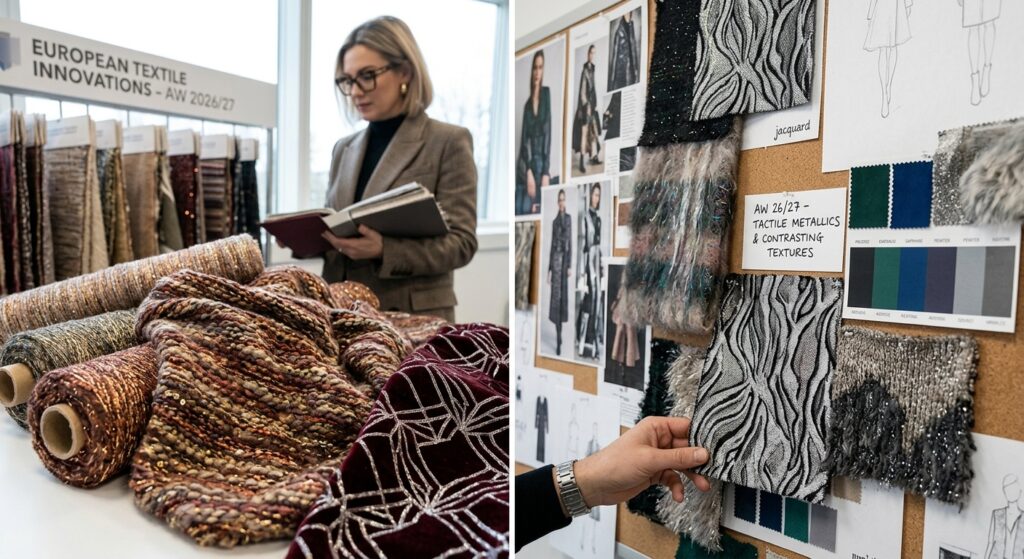
Materials are being designed to create a sensory experience through:
- Raised textures
- Soft surfaces
- Bouclé effects
- Brushed effects
- Embroidery
- Jacquard
- Velvet-like surfaces
- Metallic accents
- Mixed textures
This is important for yarn buyers because yarn itself is one of the easiest ways to introduce texture into a fabric.
A specialty yarn can change the character of a simple knit structure without requiring a completely different fabric construction.
2. Metallic Is Becoming More Sophisticated
Metallic yarn is traditionally associated with eveningwear, festive garments and highly decorative textiles.
For AW 2026/27, metallic effects can be used in a more controlled way.
European material trend research points toward metallic and reflective surfaces, including combinations of metallic yarns with textured fabrics and jacquards.
Instead of asking:
“Should we use metallic yarn?”
Designers can ask:
“Where should the metallic effect appear?”
Possible applications include:
- Fine metallic stripes
- Jacquard patterns
- Rib details
- Cuffs
- Necklines
- Fashion accessories
- Decorative knit panels
- Logo details
- Mixed-yarn structures
This approach creates a premium effect while keeping the overall design wearable.
3. Silver, Gold and Beyond
Gold and silver remain classic choices, but metallic yarn does not need to be limited to traditional metallic colours.
Depending on the collection, designers can explore:
- Silver
- Gold
- Gunmetal
- Copper
- Bronze
- Champagne
- Metallic grey
- Coloured metallic effects
The important factor is not simply the colour itself.
It is how the metallic yarn interacts with the base yarn and fabric structure.
For example:
Dark brown + bronze
can create a warm premium appearance.
Burgundy + gold
can create a richer fashion effect.
Khaki + muted metallic
can produce a more contemporary outdoor-luxury look.
The European AW 2026/27 palette includes deep brown, khaki green and burgundy, with cooler shades providing contrast.
4. Fancy Yarn Adds Depth to Simple Knitwear
Not every AW 2026/27 product needs strong metallic shine.
Fancy yarn can also create subtle visual interest through:
- Slub
- Loop
- Bouclé
- Mixed colour
- High-low texture
- Irregular surface
- Soft volume
- Contrast effects
This is particularly useful for knitwear brands that want garments to appear premium without becoming overly decorative.
A relatively simple sweater can gain a completely different identity through yarn selection.
5. Heritage Meets Modern Design
Another interesting direction is the combination of traditional textile references with modern materials.
European AW 2026/27 trends include renewed interest in heritage-inspired patterns, folk references, tartans, checks, embroidery and artisanal effects.
This creates opportunities for yarn combinations such as:
Traditional structure + metallic yarn
Heritage colour + fancy yarn
Classic wool look + high-gloss effect
Jacquard + specialty yarn
The result can feel familiar without looking old-fashioned.
6. Metallic + Matte: A More Modern Approach
One of the easiest ways to make metallic yarn more commercially versatile is to combine shine with matte yarn.
For example:
Matte base yarn + fine metallic yarn
creates a controlled highlight.
Rather than making the entire garment reflective, the metallic yarn becomes a design accent.
This can work particularly well in:
- Knitwear
- Scarves
- Fashion accessories
- Jacquard
- Rib structures
- Decorative panels
The contrast between glossy and matte surfaces is also consistent with the broader AW 2026 material direction toward sensory and contrasting finishes.
7. Sustainability Still Matters
Trend-driven products do not remove the importance of responsible material selection.
European yarn fairs have continued to highlight:
- Recycled fibres
- Bio-based materials
- Cellulosic fibres
- Biodegradable materials
- Traceability
- Circular design
These themes were already prominent in European yarn fairs for SS26 and continued into AW26/27.
For yarn suppliers, this means that “fashion effect” and “material story” increasingly need to work together.
When developing a fancy or blended yarn, buyers may want to understand not only how the yarn looks but also:
- What fibres are used?
- What is the fibre ratio?
- Can recycled materials be incorporated?
- Is the material suitable for the intended end use?
- Can the supplier provide consistent production?
8. What Does This Mean for Textile Buyers?
For sourcing managers, AW 2026/27 is not simply about purchasing “trendy yarn”.
The better strategy is to build a yarn portfolio with different levels of visual impact.
Level 1 — Subtle
Fine fancy yarn or low-shine metallic yarn.
Best for: commercial everyday knitwear.
Level 2 — Textured
Bouclé, slub, loop or blended specialty yarn.
Best for: premium sweaters and textured fabrics.
Level 3 — Statement
Strong metallic, high-gloss or highly textured yarn.
Best for: fashion collections, accessories and statement pieces.
This allows a collection to have visual variety while maintaining a consistent material story.
9. How to Choose Metallic or Fancy Yarn for AW 2026/27
Before placing an order, consider five questions:
1. What is the target customer?
Mass market, premium, luxury or fashion-forward?
2. What is the final garment?
Sweater, cardigan, scarf, accessory or decorative textile?
3. How strong should the effect be?
Subtle accent or statement effect?
4. What machine will produce the fabric?
Gauge and machine compatibility are critical.
5. What is the target cost?
The yarn should create the desired visual value without making the entire garment commercially impractical.
10. Why Sampling Matters
Trend images can show the direction, but they cannot tell you how a yarn will behave on your machine.
A professional development process should therefore include:
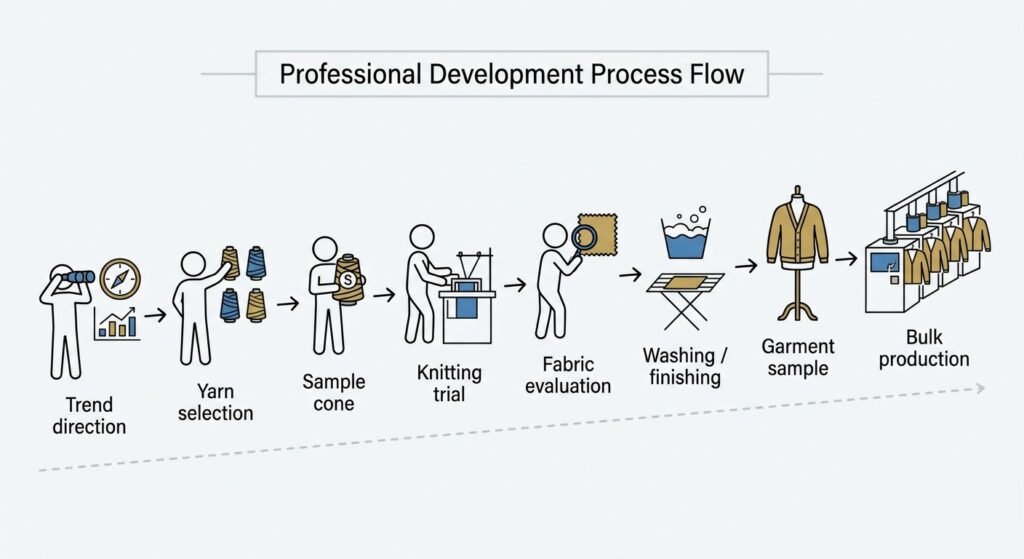
This process allows designers and sourcing teams to balance fashion appearance with manufacturing reality.
How Tongyang Yarn Can Support AW 2026/27 Development
Tongyang Yarn supplies fancy and specialty yarns for textile manufacturers and knitwear developers.
Our product development direction includes:
- Metallic yarn
- Fancy yarn
- Special-effect yarn
- High-gloss yarn
- High-elastic yarn
- Blended yarn
- Functional yarn
- Customized yarn development
For European buyers developing AW collections, the goal is not simply to supply a fashionable yarn.
It is to help match:
trend → yarn → fabric → garment → production requirement.
Samples can be developed and evaluated before moving into bulk production.
AW 2026/27 Yarn Trend Checklist
For your next collection, consider adding:
☐ Fine metallic accent yarn
☐ Gold / silver / bronze effects
☐ Matte + metallic combinations
☐ Textured fancy yarn
☐ Blended specialty yarn
☐ Heritage-inspired yarn combinations
☐ High-gloss effects
☐ Tactile surfaces
☐ Recycled or alternative fibre options
☐ Customized colour development
FAQ AND CONTACT US
Looking for metallic, fancy or specialty yarn for your AW 2026/27 collection? Contact Tongyang Yarn for samples and yarn development.