What Is Dual-Curve Yarn? A Practical Guide to Structure, Texture and Applications
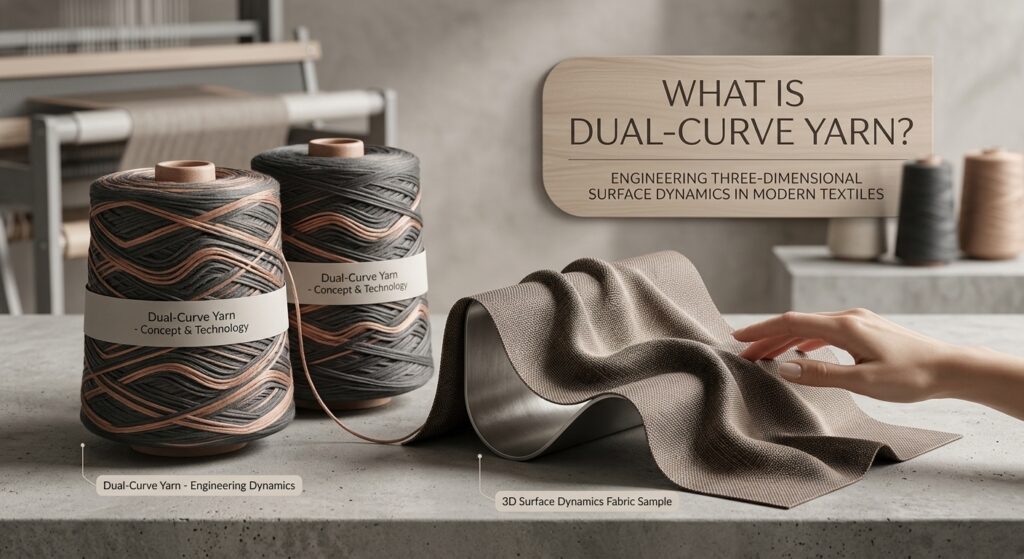
In modern textile design, yarn is more than a carrier of color and fiber. The structure of the yarn itself can influence the texture, depth, movement, and overall appearance of a finished fabric.
As fashion brands and textile manufacturers look for more distinctive surfaces, specialty fancy yarns are becoming an increasingly important tool for creating visual and tactile effects directly within the fabric.
Dual-curve yarn is one example of a specialty yarn structure designed to introduce a curved, wave-like effect into knitted and woven textiles.
But what exactly is dual-curve yarn, how does it differ from conventional fancy yarn, and where can it be used?
What Is Dual-Curve Yarn?
Dual-curve yarn is a specialty fancy yarn characterized by a controlled curved or wave-like structure.
Unlike a conventional yarn with a relatively uniform linear appearance, dual-curve yarn introduces intentional variation into the yarn structure. When knitted or woven into fabric, this structure can create additional surface texture and visual movement.
A simplified illustration looks like this:
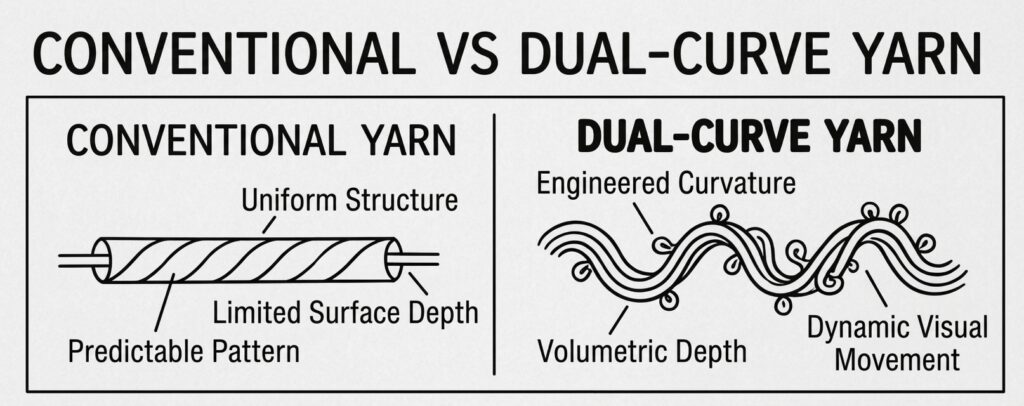
The exact appearance of the yarn depends on its fiber composition, construction, tension, twisting or processing method, and the way it is used in the final fabric.
For this reason, dual-curve yarn should be viewed not simply as a different yarn shape, but as a design tool for creating distinctive textile surfaces.
Why Does Yarn Structure Matter?
When developing a new textile, designers often think first about:
- Fiber composition
- Color
- Yarn count
- Fabric construction
- Finishing
However, yarn structure can have just as much influence on the final appearance.
A textured or curved yarn can change the way light interacts with the fabric surface and can introduce variations in height, shadow, and texture.
This can help create a fabric that looks and feels different from one made with a conventional smooth yarn.
Creating Surface Texture
One of the main reasons to use dual-curve yarn is to add texture without relying entirely on printing, embroidery, or other surface decoration.
The yarn itself contributes to the fabric structure.
Adding Visual Movement
Curved or wave-like yarn structures can create changing highlights and shadows as the fabric moves.
This can be particularly interesting for fashion knitwear, scarves, accessories, and other products where surface appearance is important.
Building Dimensional Effects
Depending on the yarn construction and fabric structure, dual-curve yarn can contribute to a more dimensional surface.
The final effect will vary according to knitting or weaving parameters, yarn tension, gauge, fabric density, and finishing.
Dual-Curve Yarn vs. Traditional Fancy Yarn
Dual-curve yarn belongs to the broader category of fancy yarn, but its visual effect is different from some more familiar novelty yarn structures.
Traditional fancy yarns include products such as:
- Slub yarn
- Bouclé yarn
- Loop yarn
- Chenille yarn
- Tape yarn
- Metallic yarn
- Other textured or decorative yarns
Each structure produces a different surface effect.
For example, slub yarn creates deliberate variations in thickness, while bouclé yarn is known for its looped appearance. Metallic yarn is primarily used to introduce shine or reflective effects.
Dual-curve yarn focuses on a curved or wave-like structural effect.
A Simple Comparison
| Feature | Conventional Yarn | Traditional Fancy Yarn | Dual-Curve Yarn |
|---|---|---|---|
| Structure | Relatively uniform | Varies by yarn type | Curved or wave-like |
| Main effect | Smooth, consistent surface | Texture, loops, slubs, shine, etc. | Dynamic curved texture |
| Surface appearance | Relatively regular | Decorative | Dimensional and textured |
| Typical use | Basic textile construction | Fashion and decorative textiles | Fashion and specialty textile development |
| Design role | Functional foundation | Decorative accent or main yarn | Structural surface effect |
The exact performance and appearance depend on the individual yarn construction and the final fabric application.
How Is Dual-Curve Yarn Used in Knitwear?
Dual-curve yarn for knitting can be used when a manufacturer or designer wants to create additional texture without changing the entire fabric concept.
It can be explored in:
Sweaters and Cardigans
Dual-curve yarn can add visual interest to relatively simple knitted structures such as jersey, rib, or other basic stitches.
Fashion Knitwear
For seasonal collections, specialty yarns can help create a more distinctive surface and differentiate a garment from standard knitwear.
Scarves and Accessories
Accessories provide more freedom to experiment with yarn structure, texture, and drape.
Dual-curve yarn can be considered for scarves, wraps, hats, and other fashion accessories.
Mixed-Yarn Knitwear
Dual-curve yarn does not necessarily have to be used on its own.
It can potentially be combined with:
- Blended yarn
- Metallic yarn
- High-gloss yarn
- Crystal yarn
- Elastic yarn
- Conventional base yarn
Combining different yarn structures can create contrast between smooth and textured areas or between matte and shiny surfaces.
Dual-Curve Yarn in Woven Fabrics
Although fancy yarn is often associated with knitwear, specialty yarn can also be explored in woven textiles.
When used as a weft or in selected woven structures, a textured yarn can introduce variation into an otherwise regular fabric surface.
Potential applications include:
- Fashion fabrics
- Outerwear fabrics
- Decorative textiles
- Accessories
- Seasonal collections
The suitability of a particular dual-curve yarn for weaving depends on its construction, strength, tension requirements, and the specific loom and fabric structure.
For commercial production, weaving trials should be carried out before bulk production.
What Should Textile Buyers Consider?
For textile mills, sourcing teams, and fashion brands, selecting a specialty yarn requires more than looking at a yarn sample.
Several technical and commercial factors should be evaluated.
1. Fiber Composition
The fiber blend affects the yarn’s:
- Hand feel
- Appearance
- Durability
- Elasticity
- Processing behavior
- Finished-fabric characteristics
Depending on the application, manufacturers may consider polyester, nylon, acrylic, viscose, wool blends, or other fiber combinations.
2. Yarn Count
Yarn count is an important specification for both knitting and weaving.
Depending on the yarn system, specifications may be expressed in Nm, Tex, or Denier.
The appropriate count should be matched to the target fabric construction and machinery.
3. Yarn Construction
The structure of the yarn determines much of the final visual effect.
Buyers should evaluate:
- Curve or wave formation
- Yarn consistency
- Surface texture
- Yarn tension
- Twist
- Package format
4. Machine Compatibility
A yarn that looks attractive on a sample card still needs to perform consistently during production.
For knitting applications, buyers should evaluate feeding, tension, gauge compatibility, and fabric formation.
For weaving, factors such as yarn strength, tension, loom settings, and end-use requirements should be considered.
5. Dimensional Stability
Specialty yarns should be evaluated after the relevant finishing and washing processes.
This helps determine whether the intended texture and appearance remain stable in the finished textile.
6. Sampling and MOQ
For a new yarn development project, buyers should clarify:
- Sample availability
- Development lead time
- Minimum order quantity
- Color options
- Customization possibilities
- Production lead time
These factors can be particularly important for fashion brands working with seasonal collections or smaller initial production runs.
Can Dual-Curve Yarn Be Customized?
Depending on the yarn structure and manufacturing process, specialty yarn can be developed around specific application requirements.
Potential customization areas may include:
- Fiber composition
- Yarn count
- Color
- Surface texture
- Degree of curvature
- Yarn construction
- Luster
- Package format
For example, a knitwear manufacturer may require a different yarn construction from a woven-fabric producer.
Instead of selecting a yarn based only on its appearance, buyers can discuss the target application, fabric construction, machine requirements, and desired visual effect with the yarn manufacturer.
This application-led approach can make the development process more efficient.
Why Sampling Matters for Specialty Yarn
Photos and yarn cards are useful for initial selection, but they cannot fully show how a specialty yarn will behave in production.
The final appearance can change depending on:
- Knitting gauge
- Stitch structure
- Fabric density
- Yarn tension
- Weaving structure
- Finishing
- Washing
- Combination with other yarns
For this reason, a practical development process is:
Yarn sample → Fabric trial → Performance evaluation → Finishing test → Final approval
This is especially important when the yarn is being developed for a new textile structure.
How Does Dual-Curve Yarn Compare With Other Specialty Yarns?
Dual-curve yarn is only one option within the broader specialty yarn market.
Depending on the desired effect, textile manufacturers may also consider:
Metallic yarn for reflective or metallic effects.
Crystal yarn for decorative sparkle and light-catching effects.
Blended yarn when the priority is balancing different fiber characteristics.
High-gloss yarn when a bright, glossy surface is required.
Textured yarn when the main objective is to increase surface variation.
The best choice depends on the final textile application rather than the yarn category alone.
You can explore Tongyang Yarn’s broader yarn product portfolio to compare different yarn systems and specialty materials.
Applications of Dual-Curve Yarn
The potential applications of dual-curve yarn include:
- Fashion knitwear
- Sweaters
- Cardigans
- Scarves
- Fashion accessories
- Woven fashion fabrics
- Decorative textiles
- Seasonal collections
For manufacturers developing a new textile product, the most appropriate application should be confirmed through sampling and production trials.
Tongyang Yarn’s applications page provides an overview of the industries and textile applications supported by its yarn systems.
Why Work With a Yarn Manufacturer on Specialty Yarn Development?
Specialty yarn development often involves more than choosing a product from an existing catalog.
The yarn needs to work with the customer’s:
- Fiber requirements
- Fabric construction
- Machinery
- Performance targets
- Appearance requirements
- Production volume
Tongyang Yarn supports custom yarn development based on material, structure, application, and production requirements. The company’s development process starts from the customer’s target application and moves through sample evaluation before production.
For buyers interested in developing a new specialty yarn, you can contact Tongyang Yarn with the target application, material preference, yarn count, expected volume, and performance requirements.
Conclusion
Dual-curve yarn offers textile designers and manufacturers another way to create distinctive surface texture directly through yarn structure.
Rather than relying entirely on printing or additional surface decoration, the yarn itself can contribute to the visual and tactile character of the finished textile.
For knitwear manufacturers, textile mills, fashion brands, and yarn buyers, dual-curve yarn can be explored as a specialty material for developing textured and visually dynamic fabrics.
As with any specialty yarn, the most important step is to evaluate the yarn in the intended fabric construction and production process.
If you are developing a new textile concept and need a customized yarn structure, talk to Tongyang Yarn’s development team about your application and sampling requirements.