Custom Specialty Yarn Manufacturer: From Yarn Concept to Sample
In the fashion, knitwear, and home textile industries, yarn is more than a raw material. It influences a fabric’s appearance, texture, elasticity, drape, and overall performance.
For apparel brands, textile mills, fashion designers, and sourcing agencies, standard commercial yarns do not always meet the requirements of a new collection. A project may call for a distinctive metallic effect, a specific blend of fibers, a customized color, a soft or textured surface, or a particular level of stretch and recovery.
This is where custom yarn development becomes valuable.
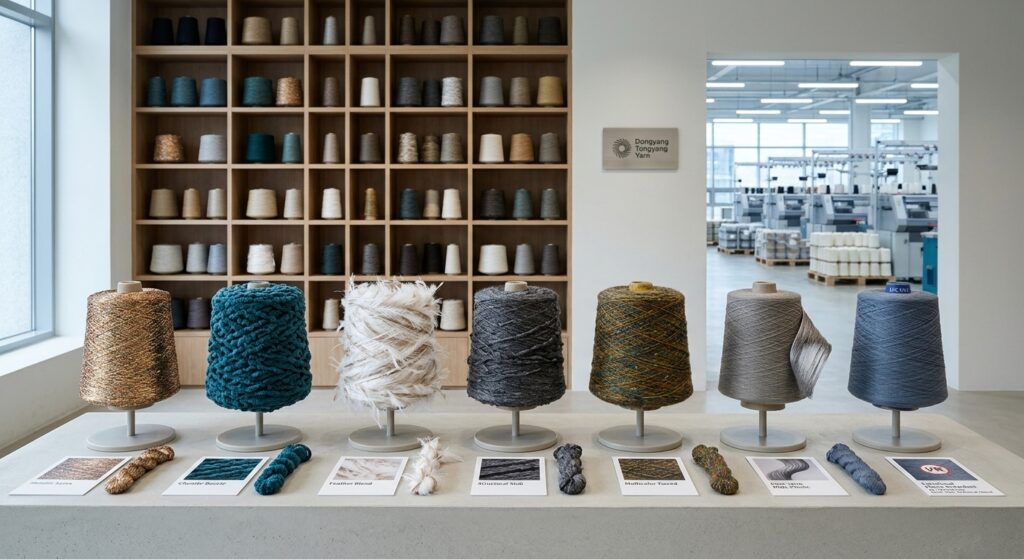
At Tongyang Yarn, we work with textile buyers seeking specialty and decorative yarn solutions, including metallic yarns, crystal yarns, dual-curve yarns, blended yarns, high-gloss yarns, elastic yarns, and functional yarns.
In this guide, we explain six key stages of the custom yarn development process and what buyers should prepare to make sampling more efficient.
Custom yarn development is the process of translating a design concept, reference sample, or technical specification into a yarn that meets defined appearance, performance, and production requirements. It involves material selection, structural development, color matching, sample testing, and production planning.
At Tongyang Yarn, we work with textile buyers seeking specialty and decorative yarn solutions, including metallic yarns, crystal yarns, dual-curve yarns, blended yarns, high-gloss yarns, elastic yarns, and functional yarns.
In this guide, we explain six key stages of the custom yarn development process and what buyers should prepare to make sampling more efficient.
The 6 Steps of Custom Yarn Development
The typical development process follows six stages:
- Concept review and reference sample analysis
- Fiber selection and yarn structure development
- Color matching and shade approval
- Pilot sampling and application testing
- Technical specification review and sample approval
- Bulk production planning and quality control
Each stage helps reduce uncertainty before a custom yarn moves into commercial production.
Step 1: Review the Design Concept and Analyze the Reference Sample
Every custom yarn project begins with understanding the intended result.
Depending on the project, buyers can provide a physical yarn sample, a fabric swatch, a design image, a mood board, or a technical brief.
Physical yarn or fabric sample
A physical sample provides useful information about the yarn’s appearance, surface texture, construction, and behavior in the finished fabric.
Where technically feasible, yarn can be unraveled from a fabric swatch for further examination. This may help identify its construction, approximate linear density, twist characteristics, and visible fiber components.
However, determining the exact fiber composition or reproducing a complex yarn may require additional testing.
Design image or mood board
When a physical sample is unavailable, high-resolution images can help communicate the desired visual effect.
For example, a buyer may want:
- A metallic finish for fashion knitwear
- A crystal-like shimmer for decorative textiles
- A high-gloss surface for statement fabrics
- A textured yarn for a distinctive knit pattern
- A blended yarn with a specific color combination
Images are useful starting points, but they cannot reliably establish exact yarn specifications on their own. Physical samples and application testing may be necessary to confirm the final construction.
Technical requirements
To help the development team assess feasibility, buyers should share as much of the following information as possible:
- Intended application, such as knitting, weaving, embroidery, or decorative textiles
- Target yarn count or denier
- Required fiber composition
- Desired color, luster, and surface effect
- Elasticity or other functional requirements
- Target price range and estimated order quantity
Practical tip: A clear reference sample and a concise specification brief can help reduce unnecessary sampling rounds.
Step 2: Select Fibers and Develop the Yarn Structure
Once the design requirements are understood, the next step is to identify a suitable material combination and yarn structure.
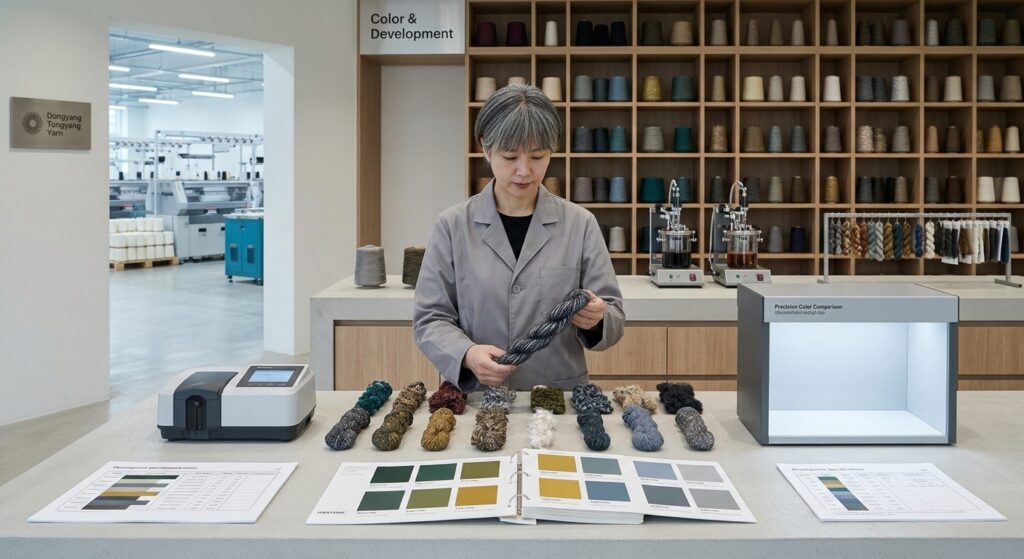
A successful specialty yarn must balance visual appearance, physical properties, process compatibility, and commercial cost.
Fiber and material selection
Depending on the application, possible material options may include:
- Polyester: Commonly used for strength, dimensional stability, and versatility.
- Nylon or polyamide: Often selected where abrasion resistance, flexibility, or other specific performance properties are important.
- Viscose: Used for a soft hand feel and distinctive appearance in suitable yarn constructions.
- Cotton: Selected for natural-fiber applications and particular tactile requirements.
- Spandex: Added when the yarn requires stretch and recovery.
- Metallic film or decorative components: Used to create reflective, shimmering, or other visual effects.
- Recycled fibers: Considered when the material specification and sourcing requirements support their use.
These materials are not interchangeable. Their suitability depends on the target yarn structure, processing conditions, end use, and required performance.
Developing specialty yarn effects
Different structures and material combinations can produce very different results.
For example, a metallic yarn for fashion knitwear may prioritize visual brightness and compatibility with the intended knitting process. An elastic yarn may require careful consideration of stretch, recovery, and machine settings. A blended yarn may need to balance color appearance, softness, durability, and cost.
At this stage, the development team evaluates feasible material combinations and identifies specifications that need to be confirmed during sampling.
What buyers should confirm: The intended application, required yarn count, composition, desired effect, and any mandatory performance criteria.
Step 3: Match the Color and Approve the Shade
Color consistency is particularly important for fashion brands and textile manufacturers working with seasonal collections or coordinated product ranges.
A shade that appears correct on a computer screen may look different when produced in yarn or incorporated into a finished fabric. Fiber type, surface texture, luster, and lighting conditions can all affect perceived color.
A structured color-matching process helps buyers and suppliers communicate more accurately.
Provide a clear color reference
Buyers can provide a Pantone reference where applicable, a physical yarn sample, a fabric swatch, or an approved color standard.
Pantone references can be useful for communicating color intent, but they do not automatically guarantee an exact match on every fiber or yarn construction.
Evaluate the color in its intended application
Where color sampling is required, the proposed shade should be assessed on the relevant material and, when possible, in the intended knitted or woven construction.
For metallic, high-gloss, and other reflective specialty yarns, visual assessment is especially important because surface reflection can change how a color appears under different lighting conditions.
Approve a production reference
Before bulk production, buyers should confirm the accepted shade reference and the agreed method for evaluating color consistency.
For projects involving multiple colors or material blends, documenting the approved references can help improve consistency between sampling and subsequent orders.
Practical tip: Whenever possible, evaluate the actual yarn or a representative fabric sample rather than relying on a digital image alone.
Step 4: Produce Pilot Samples and Test Application Compatibility
After the material and structural direction has been established, the next stage is sample production.
Depending on the yarn type and project requirements, the supplier may prepare initial sample quantities for evaluation before proceeding to a larger order.
The objective is not simply to reproduce the appearance of the reference. The sample must also be suitable for the buyer’s intended manufacturing process.
Evaluate physical characteristics
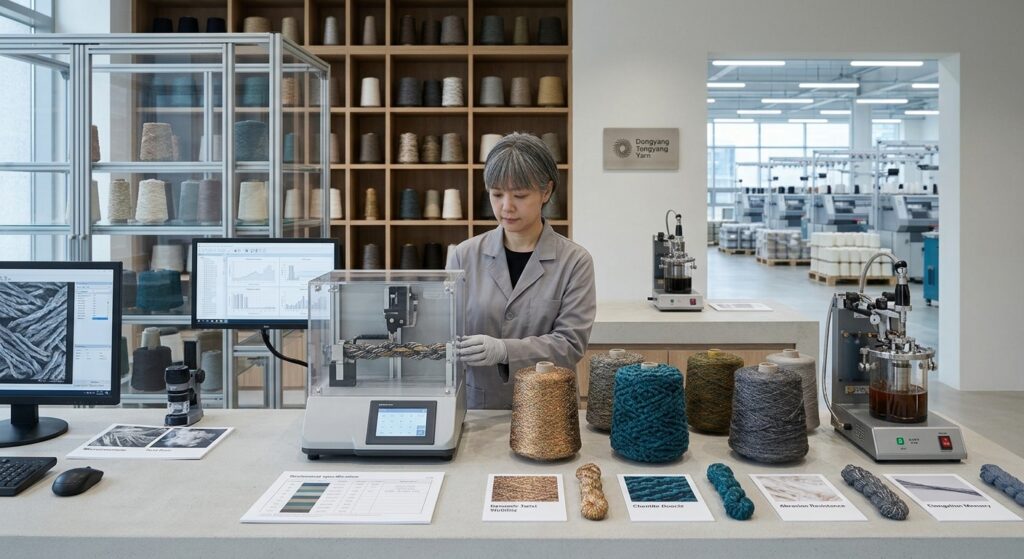
Depending on the product specification, relevant evaluation criteria may include:
- Yarn count or linear density
- Tensile strength and elongation
- Twist characteristics and stability
- Surface texture and visual uniformity
- Elasticity and recovery, where applicable
- Color appearance and consistency
Not every test applies to every yarn. The testing plan should reflect the intended application and agreed technical requirements.
Check knitting or weaving performance
A yarn that looks attractive on a sample card may behave differently on a production machine.
Where relevant, buyers should evaluate feeding behavior, tension requirements, yarn breakage, surface effects, and the appearance of the resulting fabric.
For knitting applications, machine gauge, stitch structure, and yarn tension can influence the final result. For weaving applications, yarn strength, tension stability, and compatibility with the intended process may be important.
Application testing helps identify potential issues before commercial production.
What buyers should confirm: Whether the sample has been evaluated on the intended machine or only assessed visually, and which performance criteria have been verified.
Step 5: Confirm the Technical Specifications and Approve the Sample
Once the sample meets the agreed requirements, both parties should document the approved specifications before bulk production.
A technical data sheet, or TDS, can provide a shared reference for the buyer, supplier, and production team.
Depending on the yarn, a TDS may include:
- Yarn type and product reference
- Fiber composition
- Yarn count or denier
- Color reference
- Twist or structural details, where applicable
- Elasticity or other specified performance characteristics
- Relevant test methods and results, where available
- Packaging and labeling requirements
The exact information will vary by product type.
What does sample approval mean?
Sample approval confirms that the buyer accepts the agreed reference for the next production stage. It should cover the characteristics that matter to the project, including appearance, color, construction, application performance, and any agreed technical limits.
For custom projects, it is also useful to clarify how approved samples will be retained and referenced for repeat orders.
Changes to raw materials, yarn construction, color, or processing conditions may affect the final result. Any significant changes should therefore be communicated and evaluated before production continues.
Practical tip: Keep an approved physical sample and a written specification for future quality comparisons.
Step 6: Plan Bulk Production and Maintain Quality Control
Moving from sample approval to bulk production requires more than increasing the quantity.
The supplier and buyer should align on material availability, production capacity, order quantity, delivery schedule, packaging, and inspection requirements.
Raw material and process checks
Depending on the yarn and manufacturing process, quality-control activities may include checking incoming materials, monitoring yarn appearance and consistency, and reviewing relevant physical properties.
For specialty yarns, visual consistency is especially important. Variations in luster, color, texture, or decorative effects may influence the appearance of the finished fabric.
Final inspection and packaging
Before shipment, agreed inspection criteria should be used to assess the finished order. Packaging should protect the yarn during handling and transportation and meet the buyer’s labeling and shipping requirements.
For repeat orders, the approved sample and technical specification provide useful reference points for comparing production batches.
Plan lead times realistically
Custom yarn development and bulk production timelines vary according to yarn structure, material availability, color requirements, sample revisions, and order volume.
A straightforward project using available materials may progress differently from a new construction requiring specialized components or multiple rounds of testing.
To establish a realistic schedule, buyers should confirm the following with their supplier:
- Sample preparation time
- Number of anticipated sample revisions
- Material procurement requirements
- Bulk production lead time after sample approval
- Packaging and shipping arrangements
A clearly defined development schedule helps both parties plan product launches and sourcing decisions more effectively.
How to Choose a Custom Specialty Yarn Manufacturer in China
For international buyers, selecting a custom yarn supplier involves evaluating more than the quoted price.
The right partner should understand the intended application, communicate technical requirements clearly, and help determine whether a proposed yarn can be produced consistently at the required scale.
When evaluating a custom specialty yarn manufacturer in China, consider these five factors.
1. Product specialization
Check whether the supplier’s product range and technical experience align with your project. A manufacturer experienced in decorative or specialty yarns may be better suited to a project requiring distinctive surface effects than a supplier focused exclusively on standard commodity yarns.
2. Sampling flexibility
Ask how reference samples are evaluated, what sample quantities are available, and how many development rounds may be required. Flexible sampling can help buyers assess a new yarn before committing to a larger order.
3. Technical communication
A reliable supplier should be able to discuss yarn count, material composition, intended application, and relevant performance requirements. Clear communication reduces misunderstandings between sourcing teams and production teams.
4. Quality documentation
Ask which technical specifications, inspection records, test results, and certifications are available for the specific product. Certification claims should be verified against the actual certificate, scope, issuing body, and validity period.
5. Production and delivery planning
Confirm material availability, minimum order requirements, production lead time, packaging, and shipping arrangements before placing an order.
For overseas buyers, a supplier that communicates these details clearly can make the development process more predictable.
Why Work with Tongyang Yarn on Specialty Yarn Projects?
Tongyang Yarn focuses on yarn and specialty material solutions for textile and apparel applications.
Our product range includes metallic yarns, crystal yarns, dual-curve yarns, blended yarns, high-gloss yarns, elastic yarns, and functional yarns.
For buyers developing a new collection or evaluating an alternative yarn structure, the development process starts with understanding the required effect and intended use.
To help us assess your project, please share:
- A physical yarn sample, fabric swatch, or reference image
- Your target yarn count or denier, if known
- Required fiber composition, if specified
- The intended knitting, weaving, or other application
- Estimated sample quantity and expected order volume
- Your target price range and required delivery schedule
If some specifications are not yet available, you can still share your design concept or reference sample. The initial discussion can help establish which technical details need to be confirmed.
Contact Tongyang Yarn to discuss your specialty yarn requirements and explore suitable options for your next textile project.
Frequently Asked Questions About Custom Yarn Development
1. What information do I need to start a custom yarn development project?
A physical yarn sample, fabric swatch, or clear design image is a useful starting point. If available, include the target yarn count, fiber composition, color reference, intended application, order quantity, and target price. The supplier can help identify any missing specifications.
2. Can a manufacturer reproduce a yarn from a fabric swatch?
A fabric swatch can provide useful information about yarn construction, appearance, and approximate linear density. Depending on the sample and testing available, further analysis may help identify the material composition and structural characteristics. Exact reproduction is not always possible, so a developed sample should be evaluated before bulk production.
3. Can custom yarn be developed from a photo?
A high-resolution photo can communicate the desired color, texture, luster, or decorative effect. However, a photo cannot reliably establish exact fiber composition, yarn count, twist, or mechanical performance. A physical reference sample and application testing may be needed to confirm the specifications.
4. How long does custom yarn sampling take?
Sampling time depends on the yarn structure, raw material availability, color requirements, and testing needs. Projects using available materials may be simpler than those requiring new components or multiple revisions. Ask the supplier for a project-specific sampling schedule before confirming your development plan.
5. What is the MOQ for custom specialty yarn?
Minimum order quantity varies according to yarn type, raw materials, color, production method, and customization requirements. Some projects may support small trial quantities, while others require larger production runs. Confirm the sample quantity and bulk MOQ with the supplier for your specific project.
6. Can custom yarn be used for both knitting and weaving?
Some yarns are suitable for both applications, but suitability depends on the yarn structure, strength, elasticity, surface characteristics, and machine requirements. Always communicate the intended process and evaluate a sample on the relevant equipment where necessary.
7. How can I maintain consistent quality across repeat orders?
Keep an approved physical sample and documented technical specifications. Agree on the relevant inspection criteria, color reference, and acceptable tolerances before production. For repeat orders, use these references to evaluate consistency and communicate any changes in raw materials or manufacturing conditions.
8. What certifications should I check when sourcing specialty yarn?
Certification requirements depend on the product, end use, buyer requirements, and destination market. If a project requires OEKO-TEX®, GRS, or another certification, ask the supplier for the relevant documentation and verify that its scope covers the specific product and claim. Do not assume that every yarn or product from a supplier carries the same certification.
Start Your Custom Yarn Development Project
The best custom yarn projects begin with a clear design objective, realistic technical requirements, and a structured sampling process.
From reference sample analysis and material selection to color approval and production planning, each stage helps align the desired appearance with practical manufacturing requirements.
Whether you are developing a new fashion collection, sourcing decorative yarns for knitwear, or exploring a distinctive material for a textile application, Tongyang Yarn welcomes inquiries from brands, textile mills, manufacturers, and sourcing partners.
Have a yarn sample, fabric swatch, or design concept to discuss? Contact Tongyang Yarn to start a conversation about your custom specialty yarn project.
The best custom yarn projects begin with a clear design objective, realistic technical requirements, and a structured sampling process.
Whether you are developing a new fashion collection, sourcing decorative yarns for knitwear, or exploring a distinctive material for a textile application, Tongyang Yarn welcomes inquiries from brands, textile mills, manufacturers, and sourcing partners.
Have a yarn sample, fabric swatch, or design concept to discuss? Contact Tongyang Yarn to start a conversation about your custom specialty yarn project.