Metallic Yarn Innovation: Sustainable Materials for Modern Fashion
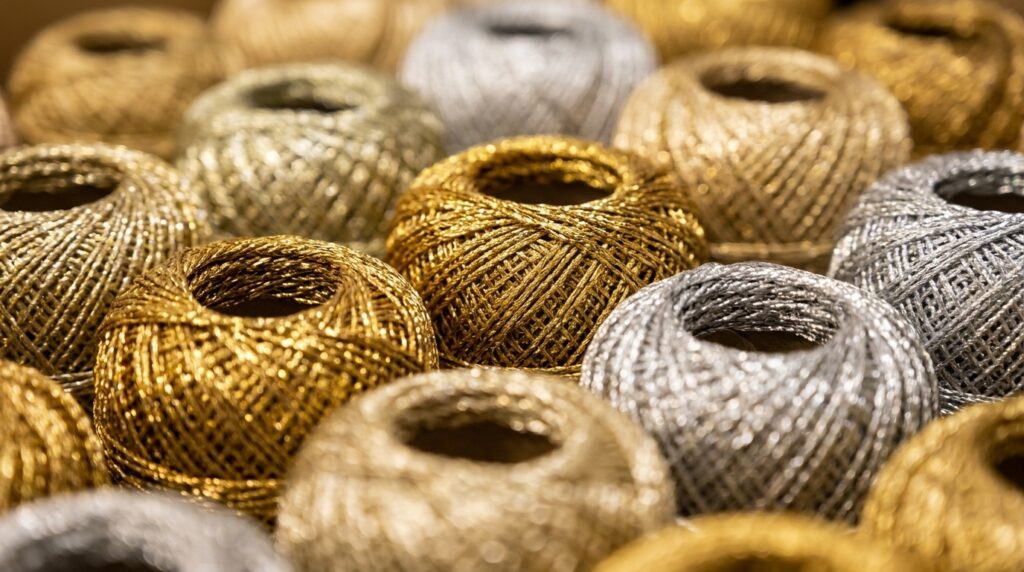
Metallic yarn brings shimmer, texture, and visual depth to modern textiles. From fashion knitwear and eveningwear to embroidery, hosiery, accessories, and home textiles, it allows designers and manufacturers to create distinctive fabrics with a reflective finish.
As the global textile industry places greater emphasis on material sourcing, chemical management, product durability, and supply chain transparency, textile buyers are paying closer attention to the materials used in decorative yarns.
This raises an important question: How can textile manufacturers balance the visual appeal of metallic yarn with evolving sustainability expectations and production requirements?
The answer lies in understanding material composition, manufacturing processes, yarn construction, and end-use performance. By evaluating these factors carefully, fashion brands and textile manufacturers can make more informed sourcing decisions.
For buyers developing new collections, choosing the right metallic yarn is not simply about color and shine. It is about finding a material that meets design expectations while performing reliably throughout knitting, weaving, finishing, and garment production.
1. Quick Answer: What Is Metallic Yarn?
Metallic yarn is a decorative textile yarn designed to create reflective or shimmering effects in fabrics. It is commonly used in knitwear, weaving, embroidery, fashion accessories, and home textiles. When selecting metallic yarn, buyers should evaluate yarn construction, appearance, machine compatibility, finishing conditions, and application-specific quality requirements. The right choice depends on the intended fabric and production process.
Its distinctive appearance makes it suitable for a wide range of textile applications, including:
- Fashion knitwear, sweaters, and cardigans
- Eveningwear, partywear, and decorative garments
- Embroidery and decorative stitching
- Hosiery and fashion accessories
- Woven fabrics and jacquard designs
- Home textiles and decorative fabrics
Metallic yarn is available in different constructions, widths, colors, and surface effects. The right choice depends on the intended application, fabric structure, machine requirements, and desired visual result.
For textile buyers, the most important consideration is selecting a yarn that combines the required appearance with suitable processability and performance.
2. Understanding Materials and Manufacturing Processes
The performance and appearance of metallic yarn depend on several factors, including the base film, reflective layer, protective coating, and overall yarn construction.
Understanding these components helps buyers evaluate different products and communicate their requirements more effectively.
Base Film and Material Selection
Metallized polyester film is commonly used in metallic yarn production because it can provide a lightweight substrate with a reflective surface.
When evaluating metallic yarn, buyers should consider the base material, film thickness where relevant, flexibility, and compatibility with the intended textile process.
Material selection can affect:
- Surface appearance and reflectivity
- Flexibility and handling
- Yarn strength and processing stability
- Compatibility with supporting fibers
- Performance during textile finishing
For projects with specific environmental requirements, buyers can also ask suppliers about alternative materials, available recycled-content options, and supporting documentation. The suitability of these options depends on the product specification and intended application.
Sustainability claims should be evaluated using relevant evidence rather than appearance or marketing descriptions alone.
Metallization and Protective Coatings
The reflective appearance of metallic yarn is often created by depositing a thin metallic layer onto a film substrate. Vacuum metallization is one process used for this purpose.
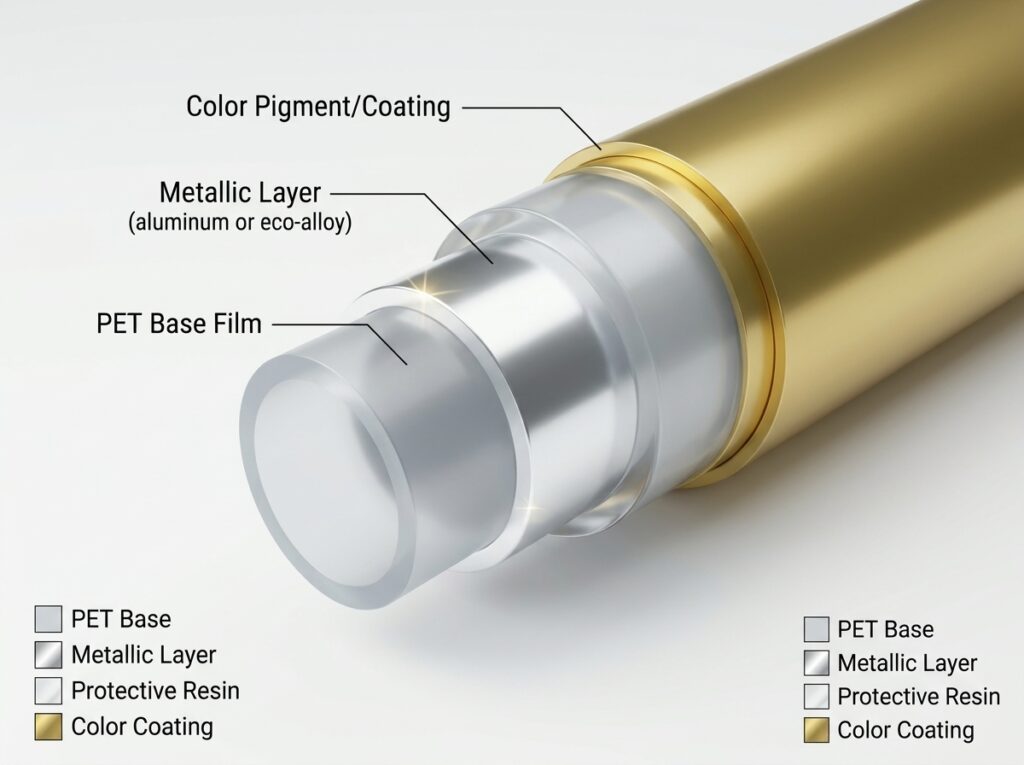
Protective coatings may be applied to help preserve the surface and maintain the intended appearance during handling and use.
When sourcing metallic yarn, buyers can ask about:
- The base film and reflective layer
- The metallization process
- The type of protective coating, where applicable
- Available technical data and chemical test reports
- Recommended storage and processing conditions
Different material systems may behave differently during manufacturing. Suppliers should therefore assess the proposed construction against the customer’s actual application requirements.
No single coating or manufacturing method guarantees that a metallic yarn is environmentally preferable. Any environmental claim should be supported by relevant information about the materials and processes involved.
Material Safety and Chemical Requirements
For international textile supply chains, chemical management is an important part of product qualification.
Depending on the destination market, end use, and buyer requirements, metallic yarn may need to be assessed against relevant chemical restrictions and restricted-substance requirements.
Before placing a bulk order, buyers should clarify:
- The destination market
- The intended end use
- Applicable customer chemical requirements
- Required test methods and documentation
- Whether available reports cover the specific product being purchased
Clear documentation helps both suppliers and buyers understand the requirements before production begins.
3. How to Evaluate Metallic Yarn Quality
Metallic yarn quality should be assessed according to its intended application rather than appearance alone.
A yarn that looks attractive on a sample card may still require further evaluation before it is used in a production environment.
Appearance and Color Consistency
Color and reflectivity are often the first considerations when selecting metallic yarn.
During sample approval, evaluate:
- Color accuracy and consistency
- Reflective effect under different lighting conditions
- Surface uniformity
- Visible defects or irregularities
- Appearance in the intended fabric structure
For commercial production, the approved sample should serve as a reference for confirming color and appearance expectations.
Strength and Processing Stability
Metallic yarn must withstand the mechanical conditions associated with its intended application.
For knitting, buyers should consider feeding stability, tension, flexibility, and the potential for breakage.
For weaving, tensile properties, elongation, abrasion, and behavior under machine tension may be important.
For embroidery and decorative applications, handling characteristics and surface consistency can influence the final result.
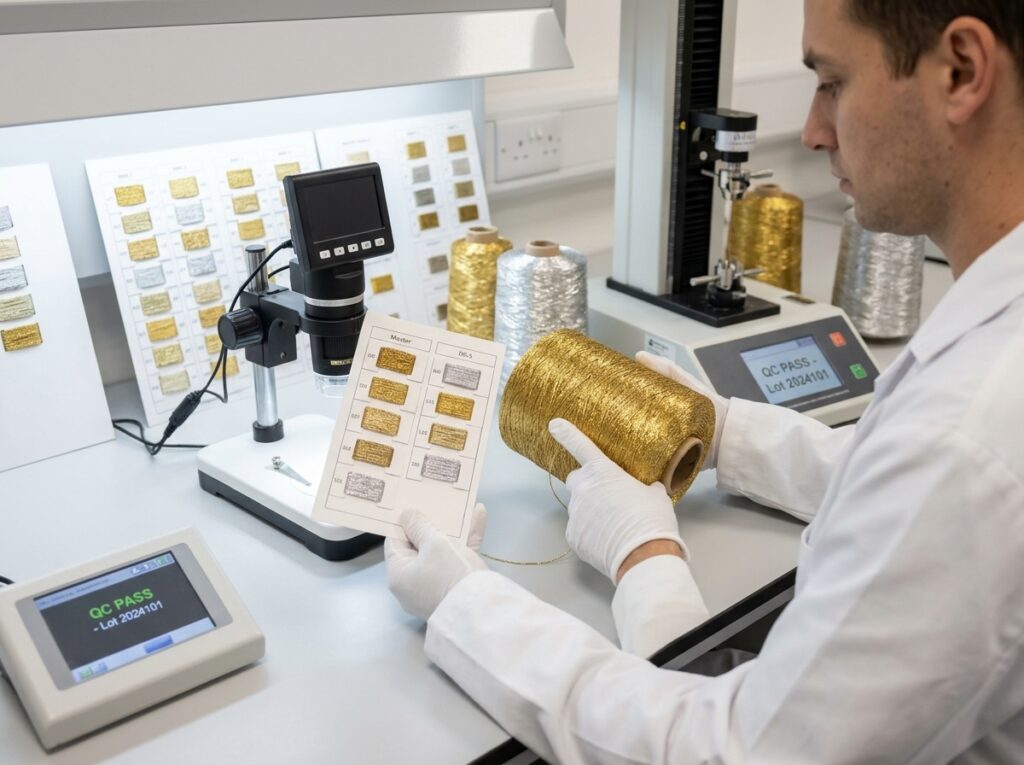
Where necessary, conduct a machine trial before approving the yarn for bulk production.
Color Fastness and Durability
The durability of metallic yarn depends on its construction, materials, processing conditions, and final application.
Depending on the intended textile product, buyers may need to evaluate washing fastness, rubbing fastness, light exposure, or appearance retention after finishing.
Testing should follow methods appropriate to the product and customer requirements. Acceptance criteria should be agreed upon before production rather than assumed from the yarn’s appearance.
Heat Resistance and Finishing Compatibility
Heat exposure during drying, heat setting, dyeing, and other finishing operations can affect metallic yarn.
The appropriate processing conditions depend on the yarn construction and material composition. Not every metallic yarn is suitable for every high-temperature process.
Before production, communicate the intended finishing recipe and temperature range to the supplier. Where necessary, validate the proposed yarn under the actual processing conditions.
For blended fabrics, consider the requirements of both the metallic yarn and the companion fibers.
4. Choosing Metallic Yarn for Different Textile Applications
Different textile applications place different demands on metallic yarn. Selecting the appropriate product begins with understanding how the yarn will be used.
| Buyer requirement | What to check | Why it matters |
|---|---|---|
| Knitting | Feeding stability, flexibility, machine compatibility | Helps reduce processing issues |
| Weaving | Tensile properties, elongation, surface consistency | Supports stable fabric production |
| Embroidery | Handling, appearance, breakage behavior | Helps maintain decorative quality |
| Fashion knitwear | Luster, softness, companion yarn compatibility | Balances appearance and fabric feel |
| Heat finishing | Recommended temperature and processing conditions | Helps prevent damage during finishing |
| Custom development | Color reference, target fabric, technical specifications | Helps suppliers assess the requested construction |
Metallic Yarn for Knitting
In knitting applications, flexibility, yarn feeding, tension stability, and machine compatibility are important considerations.
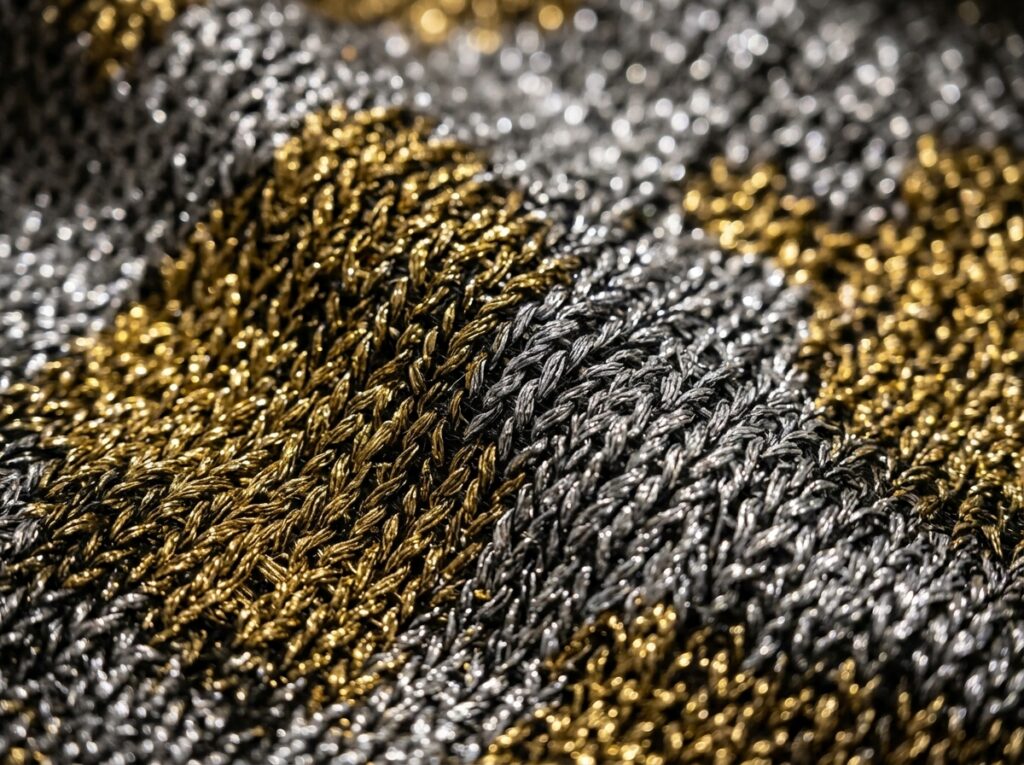
Metallic yarn may be combined with other fibers to create decorative effects in sweaters, cardigans, fashion tops, and accessories.
Before production, buyers should confirm the intended machine type, gauge, yarn-feeding conditions, and compatibility with companion yarns.
A small production trial can help identify potential processing issues before a larger order is placed.
Metallic Yarn for Weaving
Woven fabrics may require metallic yarn to withstand sustained tension and repeated mechanical movement.
When sourcing for weaving, evaluate the yarn’s mechanical properties, surface quality, and compatibility with the intended fabric structure.
For jacquard and decorative woven fabrics, the yarn’s reflective effect should also be assessed in the finished design rather than only as a loose yarn.
Metallic Yarn for Fashion and Decorative Textiles
Metallic yarn can create visual highlights in garments, accessories, embroidery, and home textiles.
Designers may use it as a feature yarn or combine it with other fibers to balance appearance, texture, and comfort.
The final result depends on yarn construction, color selection, fabric structure, and finishing. Reviewing a fabric swatch can therefore be more informative than evaluating the yarn in isolation.
5. Conventional and Sustainability-Focused Metallic Yarn: A Buyer Comparison
Buyers evaluating different metallic yarn options should compare documented product characteristics and actual performance.
| Evaluation factor | Questions for buyers |
|---|---|
| Base material | What film or supporting fiber is used? |
| Recycled content | Is recycled material available, and can the content be documented? |
| Manufacturing process | What metallization and coating processes are used? |
| Appearance | Does the yarn achieve the required color, reflectivity, and surface quality? |
| Mechanical performance | Is the yarn suitable for the intended machine and fabric structure? |
| Chemical requirements | What test reports or compliance documents are available? |
| Processing conditions | What temperature and finishing conditions are recommended? |
| Traceability | Can the supplier provide relevant material and product documentation? |
| Commercial requirements | What are the MOQ, lead time, packaging, and sampling arrangements? |
A responsible sourcing decision should consider the complete product specification. Recycled content, chemical compliance, mechanical performance, and environmental impact are separate factors and should be evaluated independently.
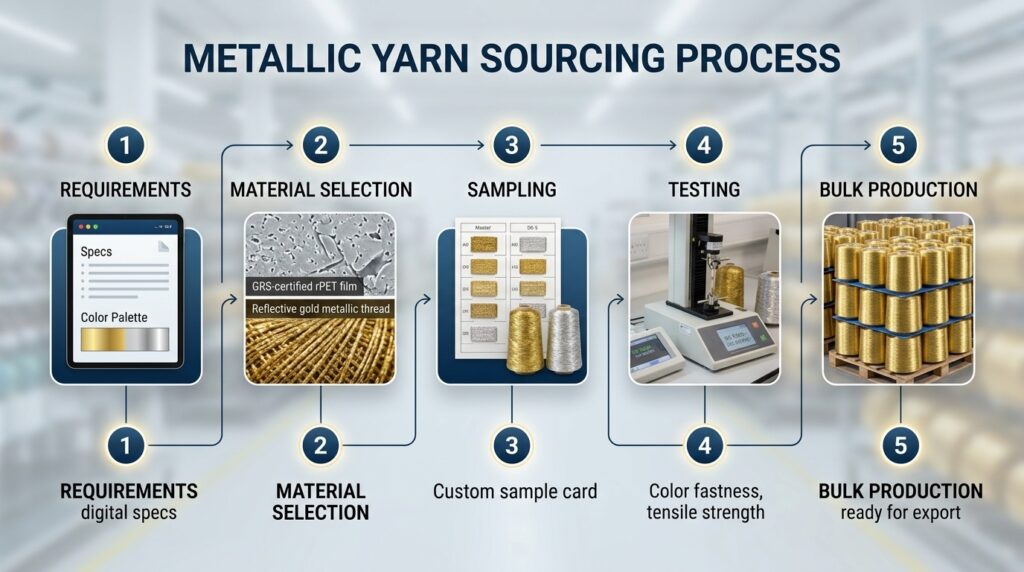
6. A Practical Sourcing Checklist for Metallic Yarn Buyers
A structured sourcing process helps textile manufacturers reduce development delays and improve communication with suppliers.
Step 1: Define the Application
Specify whether the yarn will be used for knitting, weaving, embroidery, hosiery, accessories, or home textiles.
Include the target fabric type and the role of metallic yarn in the finished product.
Step 2: Confirm Technical Specifications
Provide the required yarn construction and relevant technical parameters, such as film width, denier, supporting filament, or other specification details where applicable.
If you do not have a complete specification, a fabric sample or reference product can help communicate the requirement.
Step 3: Specify the Desired Appearance
Identify the preferred color, metallic effect, reflectivity, and texture.
Reference photos, physical swatches, and existing fabric samples can help reduce ambiguity during product development.
Step 4: Share Machine and Finishing Conditions
Explain the intended production equipment, processing speed where relevant, operating conditions, and finishing requirements.
This information allows the supplier to assess whether the proposed yarn is suitable for the application.
Step 5: Confirm Documentation Requirements
Identify the destination market and any customer-specific requirements for chemical testing, recycled content, traceability, or product documentation.
Confirm availability and scope before making compliance-related decisions.
Step 6: Evaluate Samples
Review the yarn’s color, surface quality, flexibility, processing behavior, and compatibility with the intended fabric.
Where necessary, carry out machine trials and application-specific tests.
Step 7: Confirm Bulk Production Details
Before placing an order, agree on the approved sample, product specifications, tolerances, quantity, packaging, lead time, quality requirements, and inspection arrangements.
A clear written specification helps establish consistent expectations between the buyer and supplier.
7. Metallic Yarn Development with Tongyang Yarn
Tongyang Yarn supports textile buyers looking for yarn options for fashion, decorative textiles, and specialized applications.
For metallic and decorative yarn projects, providing clear technical and commercial requirements is a practical starting point for evaluating suitable options.
When contacting Tongyang Yarn, buyers can share:
- Intended application and target fabric
- Required yarn construction or technical specifications
- Preferred color and reflective effect
- Estimated order quantity
- Machine and finishing requirements
- Destination market and applicable documentation requirements
These details help establish the scope of the project and support discussions about product suitability, sample evaluation, and customized development.
For buyers who are still at the design stage, reference photos or fabric samples can help communicate the intended appearance.
The objective is to identify a metallic yarn that meets the project’s design and production requirements, with technical details and commercial terms confirmed before bulk manufacturing.
FAQ
Discuss Your Metallic Yarn Requirements with Tongyang Yarn
Metallic yarn development involves more than selecting an attractive color. Material composition, yarn construction, machine compatibility, finishing conditions, and quality requirements all influence the final result.
For fashion brands, textile mills, and sourcing teams developing new collections, early communication with the supplier can help clarify technical requirements and identify suitable product options.
Contact Tongyang Yarn to discuss your metallic yarn requirements, explore available options, and evaluate solutions for your next textile project.